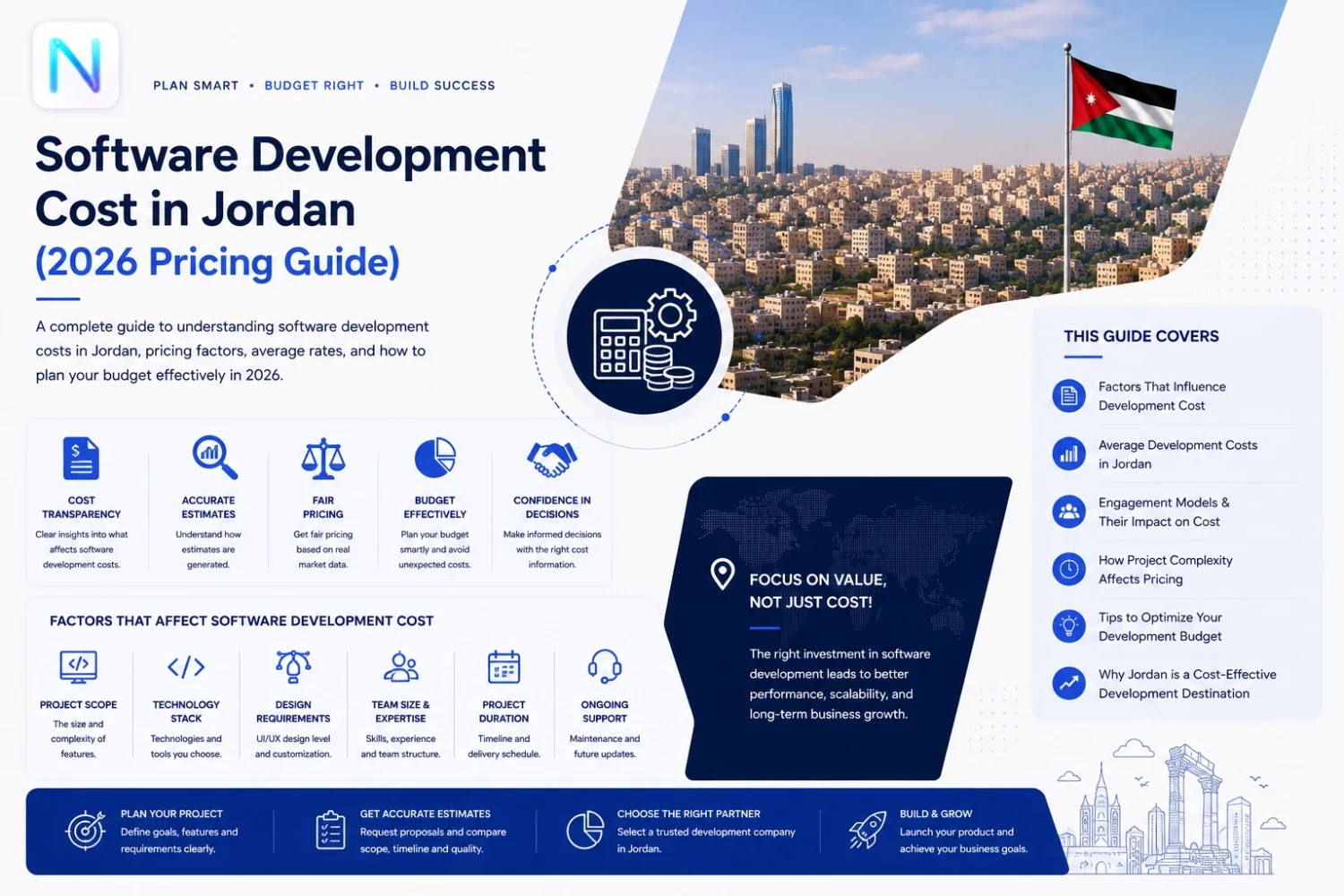
Software development has become one of the most important investments for businesses seeking digital transformation, operational efficiency, and long-term growth. Whether you need a corporate website, mobile application, ERP system, CRM platform, SaaS solution, or enterprise software, one of the first questions businesses ask is:
"How much does software development cost in Jordan?"
The answer is not always straightforward. Unlike off-the-shelf software with fixed pricing, custom software is built according to each company's unique requirements. The total investment depends on factors such as project scope, business complexity, integrations, security requirements, technologies used, and future scalability.
Jordan has become one of the leading software development destinations for businesses across Saudi Arabia and the GCC due to its highly skilled software engineers, competitive pricing, strong technical expertise, and geographical proximity. Companies increasingly choose Jordanian software development firms to build secure, scalable, and cost-effective digital solutions that meet international standards while remaining more affordable than many global markets.
Whether you are a startup planning your first MVP, an established company modernizing legacy systems, or an enterprise developing a large digital platform, understanding software development costs helps you plan your budget, prioritize features, and choose the right development partner.
In this comprehensive 2026 pricing guide, you'll learn everything about software development costs in Jordan, including pricing factors, project types, development models, hidden expenses, timelines, budgeting strategies, and how to maximize your return on investment.
Why Software Development Costs Vary
One of the biggest misconceptions is that software projects have a fixed market price. In reality, every software project is unique, and pricing varies significantly depending on business objectives and technical requirements.
Several factors influence the final development cost.
Business Requirements
Every business has different operational processes and objectives.
For example:
- A restaurant management system differs significantly from a logistics platform.
- A healthcare application requires different workflows than a real estate portal.
- An educational platform has different requirements than an ERP system.
The more specialized your business processes are, the more customization will be required.
Number of Features
The number of features directly impacts the project's complexity.
Basic software may include:
- User registration
- Login
- Dashboard
- Basic reports
Advanced software may include:
- Workflow automation
- Notifications
- AI-powered recommendations
- Payment processing
- Multi-language support
- Advanced reporting
- Role-based permissions
- API integrations
The greater the number of features, the more development time and testing are required.
Project Complexity
Software projects generally fall into three categories:
Simple Projects
Examples:
- Company websites
- Portfolio websites
- Landing pages
- Appointment booking systems
These usually require fewer integrations and limited business logic.
Medium Complexity Projects
Examples:
- CRM Systems
- Inventory Management
- Booking Platforms
- E-Commerce Platforms
- Internal Business Portals
These involve more workflows, user roles, and integrations.
Enterprise Software
Examples:
- ERP Systems
- Banking Platforms
- Healthcare Management Systems
- Logistics Platforms
- Marketplace Applications
- Government Platforms
- SaaS Products
Enterprise software typically requires extensive planning, security, scalability, and custom architecture.
User Roles and Permissions
Software supporting multiple user types requires additional development.
Examples include:
- Super Administrators
- Administrators
- Managers
- Employees
- Customers
- Vendors
- Service Providers
- Partners
Each role often requires different dashboards, permissions, reports, and workflows.
API Integrations
Modern software rarely operates in isolation.
Many systems integrate with:
- ERP platforms
- CRM systems
- Payment gateways
- WhatsApp Business API
- SMS providers
- Google Maps
- Email services
- Government platforms
- Accounting software
- Shipping companies
- Cloud storage services
Each integration requires additional development, testing, and maintenance.
Security Requirements
Projects handling sensitive business or customer information require stronger security measures.
These may include:
- Multi-Factor Authentication (MFA)
- Data Encryption
- Secure APIs
- Audit Logs
- Activity Monitoring
- Role-Based Permissions
- Compliance Requirements
- Backup & Disaster Recovery
Higher security requirements increase development effort but provide better protection for business data.
Cloud Infrastructure
The hosting environment also influences overall project cost.
Businesses may choose:
- Shared Hosting
- VPS Servers
- Dedicated Servers
- Cloud Infrastructure
- Multi-region Deployments
Larger systems usually require scalable cloud infrastructure to ensure high availability and performance.
Mobile Applications
If the project includes mobile applications for Android and iOS in addition to a web platform, development effort increases.
Businesses often require:
- Android Application
- iOS Application
- Web Dashboard
- Admin Panel
Each platform requires additional design, development, testing, and maintenance.
Artificial Intelligence Features
Modern software increasingly incorporates AI capabilities such as:
- Intelligent search
- AI chatbots
- Predictive analytics
- Document processing
- Recommendation engines
- Image recognition
- Voice assistants
- Automated reporting
These advanced capabilities add value to the solution but also increase development complexity and cost.
Scalability Requirements
Businesses planning long-term growth should invest in scalable software architecture.
Scalable systems support:
- More users
- Additional branches
- Multiple companies
- International expansion
- High transaction volumes
- Future feature additions
Although scalable architecture may increase initial investment, it significantly reduces redevelopment costs as the business grows.
Development Team Size
The number of specialists involved in the project also affects pricing.
A professional software development team may include:
- Project Manager
- Business Analyst
- UI/UX Designer
- Frontend Developer
- Backend Developer
- Mobile Developer
- QA Engineer
- DevOps Engineer
- Database Engineer
Larger and more complex projects require larger multidisciplinary teams to ensure successful delivery.
Understanding these cost factors helps businesses plan realistic budgets and choose the most suitable software development approach for their goals.
Average Software Development Costs in Jordan
One of the most common questions businesses ask is:
"How much does software development cost in Jordan?"
There is no universal price because every project differs in terms of features, complexity, integrations, security requirements, and business objectives. Instead of focusing on a fixed number, companies should estimate a realistic budget based on the scope of work.
Below are the most common software projects and the factors that influence their investment.
Business Website
A business website is ideal for companies that want to establish a professional online presence.
Typical features include:
- Home page
- About Us
- Services
- Portfolio
- Blog
- Careers
- Contact Form
- SEO Optimization
- Multi-language Support
- Content Management System (CMS)
The overall cost depends on:
- Number of pages
- Custom UI/UX design
- Animations
- Multi-language support
- CMS functionality
- Integrations with third-party services
Corporate Website
Corporate websites generally require more advanced functionality than standard business websites.
Additional features may include:
- Investor Relations
- Company News
- Career Portal
- Branch Locator
- Interactive Contact Forms
- Secure Document Downloads
- Advanced SEO Structure
- Multi-region Support
These projects usually require stronger security, scalability, and content management capabilities.
E-Commerce Website
E-commerce platforms involve significantly more functionality than standard websites.
Typical modules include:
- Product Catalog
- Categories
- Shopping Cart
- Wishlist
- Product Reviews
- Coupon System
- Online Payments
- Shipping Integration
- Order Tracking
- Inventory Management
- Customer Accounts
- Admin Dashboard
The investment depends on:
- Number of products
- Payment gateways
- Shipping providers
- Warehouse integration
- Marketplace functionality
- Mobile responsiveness
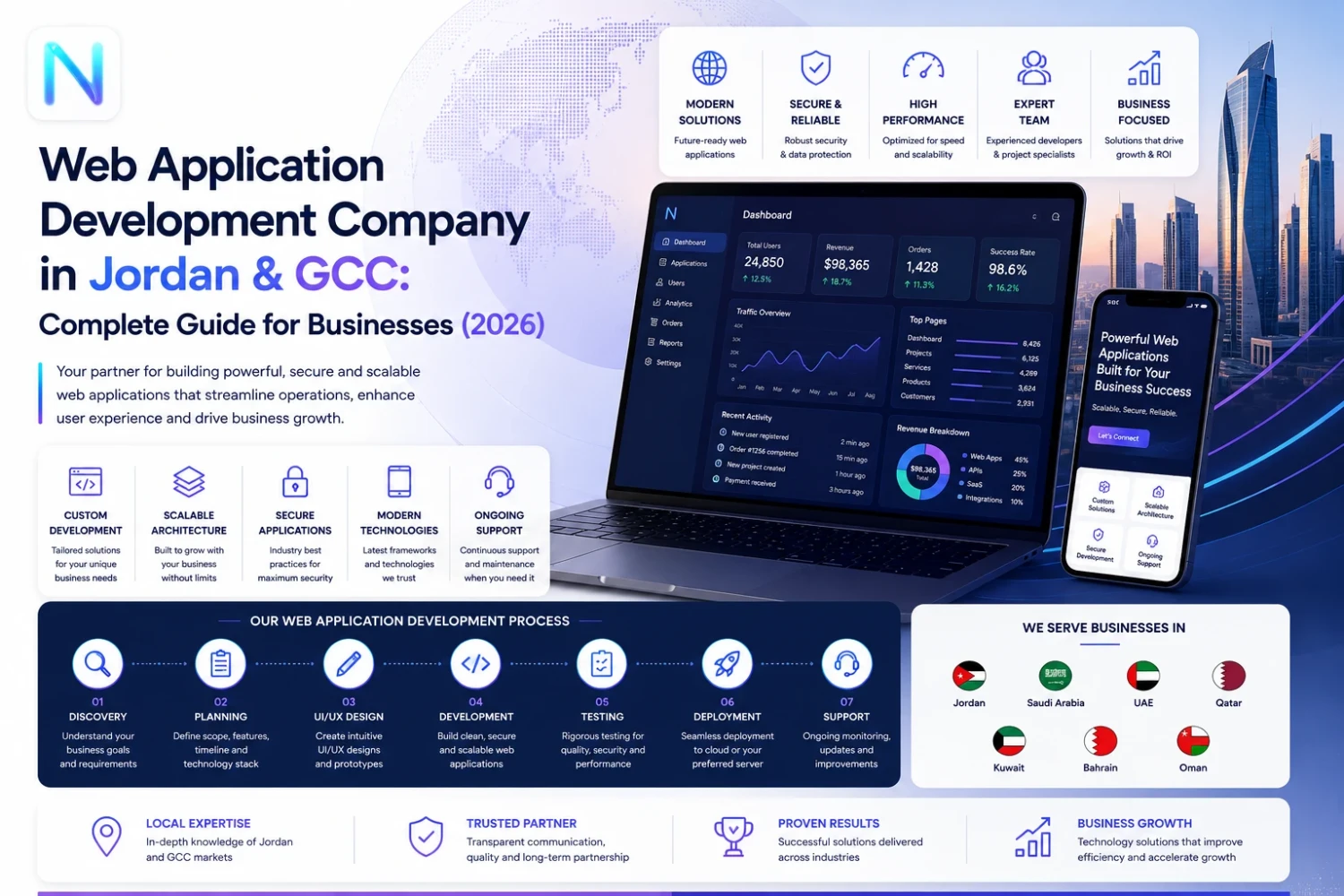
Web Application
Web applications are customized systems designed to solve specific business challenges.
Examples include:
- Booking Platforms
- HR Systems
- Inventory Systems
- Project Management Platforms
- Logistics Platforms
- Learning Management Systems
- Healthcare Portals
- Internal Business Systems
Pricing varies according to:
- Business logic
- Workflow automation
- User permissions
- Integrations
- Reporting requirements
- Scalability
Mobile Application
Mobile application development includes Android, iOS, or both platforms.
Typical features include:
- User Registration
- Authentication
- Push Notifications
- Maps
- Payments
- Chat
- Media Uploads
- Location Services
- Offline Mode
- API Integration
Development cost depends on:
- Number of platforms
- Native or Cross-Platform development
- Backend infrastructure
- Cloud services
- Third-party APIs
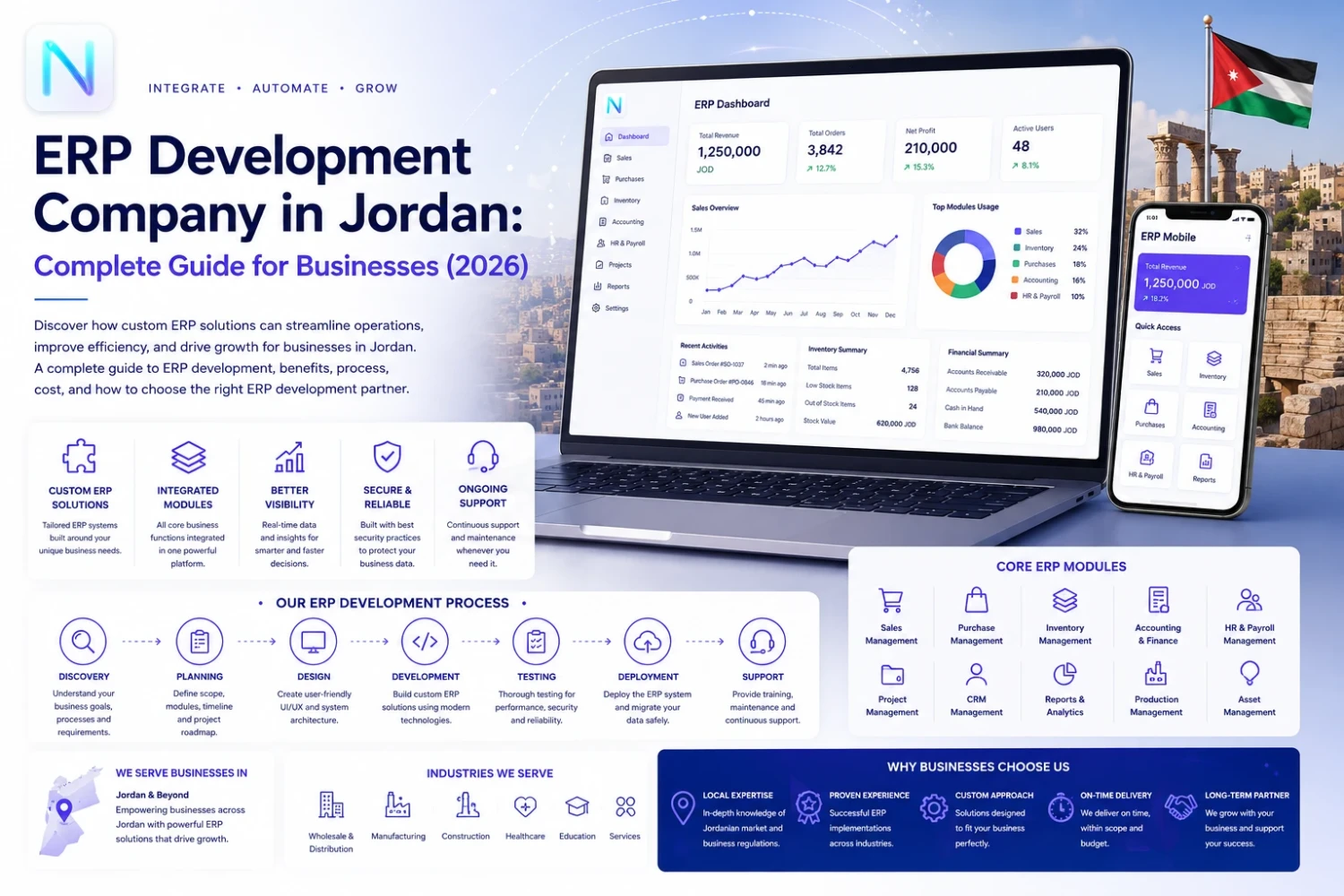
ERP System
Enterprise Resource Planning (ERP) systems are among the most complex software projects.
Common modules include:
- Finance
- Accounting
- HR
- Payroll
- Procurement
- Inventory
- Manufacturing
- CRM
- Sales
- Purchasing
- Asset Management
- Business Intelligence
ERP pricing depends on:
- Number of modules
- Number of users
- Branches
- Companies
- Integrations
- Workflow complexity
- Approval processes
- Reporting requirements
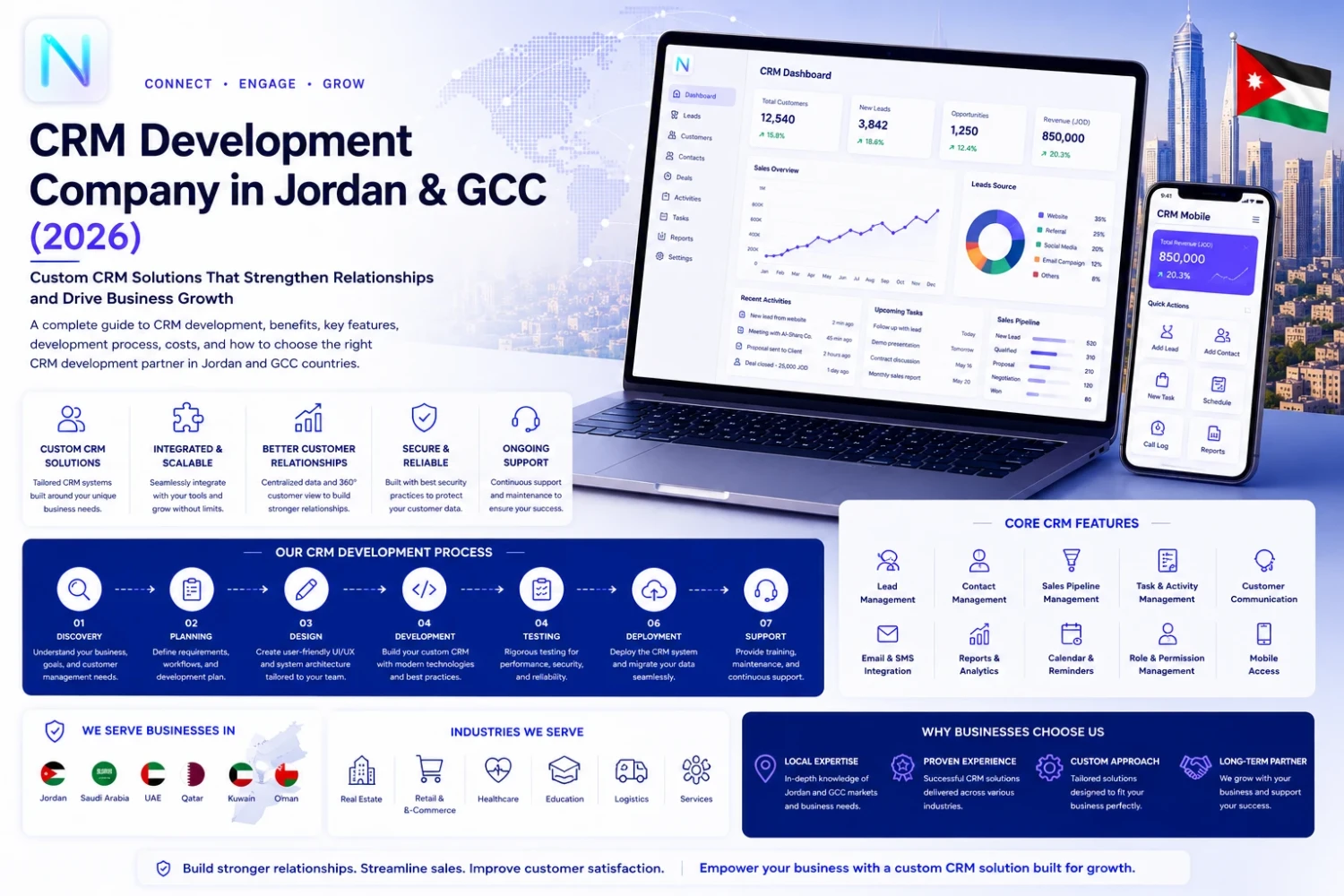
CRM System
CRM systems help businesses manage customers, sales, and marketing activities.
Typical modules include:
- Lead Management
- Customer Management
- Sales Pipeline
- Quotations
- Marketing Automation
- WhatsApp Integration
- Email Integration
- Customer Support
- Reports
- Dashboards
Pricing varies based on:
- Sales workflows
- Automation requirements
- Integrations
- AI capabilities
- Mobile applications
SaaS Platform
Software-as-a-Service (SaaS) products require cloud-native architecture and subscription management.
Common SaaS features include:
- Subscription Plans
- User Billing
- Multi-Tenant Architecture
- User Management
- Analytics
- API Access
- Role Permissions
- Payment Integration
The complexity of multi-tenant architecture usually makes SaaS development one of the more advanced software investments.
Enterprise Software
Large organizations often require enterprise-grade software designed specifically for their operations.
Examples include:
- Banking Platforms
- Insurance Systems
- Government Platforms
- Healthcare Information Systems
- Supply Chain Management
- Enterprise Portals
Enterprise software emphasizes:
- High availability
- Advanced security
- Compliance
- Scalability
- Performance
- Integration with existing systems
Marketplace Platform
Marketplace platforms connect multiple buyers and sellers through a single digital ecosystem.
Typical features include:
- Buyer Accounts
- Seller Accounts
- Admin Dashboard
- Commission Management
- Online Payments
- Messaging
- Ratings & Reviews
- Order Management
- Wallet System
- Notifications
- Analytics
Marketplace platforms usually require advanced architecture because they support multiple user types and complex business workflows.
Software Development Pricing Models
Choosing the right pricing model is just as important as choosing the right development company. Different projects require different engagement models depending on their complexity, flexibility, and timeline.
Fixed Price Model
In a fixed-price model, the project scope, features, timeline, and budget are agreed upon before development begins.
Advantages
- Predictable budget.
- Clearly defined scope.
- Easier financial planning.
- Suitable for projects with stable requirements.
Best For
- Corporate websites.
- Small business systems.
- MVPs with fixed features.
- Projects with detailed specifications.
Time & Materials Model
Under this model, businesses pay based on the actual time and resources used during development.
This approach provides greater flexibility and allows features to evolve throughout the project.
Advantages
- Flexible scope.
- Faster adaptation to business changes.
- Continuous improvements.
- Better for innovation.
Best For
- SaaS products.
- Startup platforms.
- Enterprise systems.
- Long-term digital transformation projects.
Dedicated Team Model
A dedicated team works exclusively on your project as an extension of your organization.
The team may include:
- Project Manager
- Business Analyst
- UI/UX Designer
- Frontend Developers
- Backend Developers
- Mobile Developers
- QA Engineers
- DevOps Engineers
Advantages
- Full control over priorities.
- Long-term collaboration.
- High productivity.
- Deep understanding of business requirements.
- Continuous development after launch.
Best For
- Large enterprises.
- Ongoing software products.
- SaaS companies.
- Organizations with continuous development needs.
Selecting the right pricing model depends on your project goals, available budget, desired flexibility, and long-term product roadmap. A well-chosen engagement model can reduce project risks, improve collaboration, and deliver better value throughout the software development lifecycle.
Factors That Affect Software Development Cost
The final cost of software development depends on multiple technical and business factors. Understanding these factors helps companies estimate realistic budgets and prioritize features before starting development.
Business Requirements
Every business has unique goals, workflows, and operational processes.
For example:
- A logistics company requires shipment tracking.
- A healthcare provider requires patient management.
- A construction company needs project management.
- A retail business focuses on inventory and sales.
- A financial institution requires advanced security and compliance.
The more customized the business requirements, the more development effort is needed.
Number of Features
The number and complexity of features directly influence development time and cost.
Basic software may include:
- User Registration
- Login
- Dashboard
- Profile Management
- Reports
Advanced software may include:
- AI Automation
- Real-Time Notifications
- Advanced Analytics
- Workflow Automation
- Multi-language Support
- Approval Workflows
- Digital Signatures
- Mobile Applications
- Offline Mode
Adding advanced functionality increases both development and testing requirements.
UI/UX Design
Professional user interface (UI) and user experience (UX) design improve usability and customer satisfaction.
A modern software project usually includes:
- User Research
- Wireframes
- Interactive Prototypes
- Responsive Design
- Accessibility
- Design System
- Mobile Optimization
Well-designed interfaces reduce training time and improve employee productivity.
Custom Development
Every custom feature requires:
- Business Analysis
- Database Design
- Backend Development
- Frontend Development
- Testing
- Documentation
Custom-built software provides greater flexibility than ready-made systems but requires additional planning and development effort.
Third-Party Integrations
Modern software often communicates with external services.
Examples include:
- Payment Gateways
- WhatsApp Business API
- SMS Providers
- Email Platforms
- Google Maps
- Microsoft 365
- ERP Systems
- CRM Systems
- Government APIs
- Shipping Companies
- Accounting Software
Each integration requires API development, authentication, testing, and maintenance.
Security Requirements
Security becomes increasingly important as software handles more sensitive information.
Advanced security features may include:
- Multi-Factor Authentication (MFA)
- Encryption
- Audit Logs
- Secure API Authentication
- Activity Monitoring
- Single Sign-On (SSO)
- Role-Based Permissions
- Compliance Requirements
- Security Testing
Higher security standards increase development effort but significantly reduce business risk.
Cloud Infrastructure
Hosting architecture affects both implementation complexity and long-term operational costs.
Common deployment options include:
- Shared Hosting
- VPS Servers
- Dedicated Servers
- AWS
- Microsoft Azure
- Google Cloud Platform
- Kubernetes
- Docker Containers
Scalable cloud infrastructure supports business growth and improves reliability.
Scalability
Businesses planning future growth should build software capable of scaling without major redevelopment.
Scalable software supports:
- More Users
- More Branches
- Multiple Companies
- Higher Transaction Volumes
- Additional Modules
- International Expansion
Investing in scalability early often reduces future redevelopment costs.
Artificial Intelligence
Many organizations are now incorporating AI capabilities into their software.
Examples include:
- AI Chatbots
- Intelligent Search
- Predictive Analytics
- Lead Scoring
- Recommendation Engines
- OCR Document Processing
- Voice Assistants
- AI Reporting
AI features typically require additional infrastructure, integrations, and specialized development.
Software Testing
Testing is an essential part of every professional software project.
Testing activities include:
- Functional Testing
- Performance Testing
- Security Testing
- Integration Testing
- User Acceptance Testing (UAT)
- Mobile Testing
- Cross-Browser Testing
Comprehensive testing improves software quality and reduces future maintenance costs.
Maintenance and Support
Software development does not end after launch.
Ongoing services often include:
- Bug Fixes
- Security Updates
- Performance Optimization
- Feature Enhancements
- Server Monitoring
- Database Optimization
- Cloud Maintenance
- Technical Support
Businesses should always allocate budget for long-term maintenance to ensure software remains secure, stable, and up to date.
Software Development Cost by Project Complexity
Software projects are generally classified into three categories based on complexity.
Simple Software Projects
Simple software solutions are suitable for startups and small businesses with straightforward operational needs.
Examples include:
- Company Websites
- Landing Pages
- Portfolio Websites
- Appointment Booking Systems
- Basic Internal Dashboards
- Simple Inventory Systems
Typical Characteristics
- Limited number of users
- Basic authentication
- Few integrations
- Standard reporting
- Short development timeline
Simple projects are ideal for businesses looking to establish a digital presence or automate a small number of processes.
Medium Complexity Software
Medium-sized projects require more advanced business logic and multiple interconnected modules.
Examples include:
- CRM Systems
- HR Management Systems
- School Management Systems
- Clinic Management Systems
- Restaurant Management Systems
- E-Commerce Platforms
- Booking Platforms
- Property Management Systems
Typical Characteristics
- Multiple user roles
- Workflow automation
- API integrations
- Mobile responsiveness
- Advanced dashboards
- Reporting
- Notifications
- Customer portals
These projects typically involve more planning, testing, and integration than basic applications.
Enterprise Software
Enterprise-grade software supports large organizations with complex business operations.
Examples include:
- ERP Systems
- Banking Platforms
- Insurance Systems
- Government Systems
- Healthcare Information Systems
- Supply Chain Platforms
- Manufacturing Systems
- Logistics Platforms
- Large SaaS Products
- Multi-Vendor Marketplaces
Typical Characteristics
- Thousands of users
- High availability
- Advanced security
- Multi-company support
- Multi-branch management
- High-performance databases
- Cloud-native architecture
- Business Intelligence
- AI Integration
- Complex approval workflows
- Large-scale API ecosystem
Enterprise software requires extensive planning, experienced development teams, and scalable infrastructure to support long-term business growth.
Understanding the complexity of your project helps determine the appropriate budget, timeline, technology stack, and development approach before implementation begins.
Software Development Cost by Industry
Every industry has unique operational requirements, compliance standards, and business workflows. As a result, software development costs vary depending on the industry and the level of customization required.
Healthcare
Healthcare organizations require highly secure software capable of managing sensitive patient information while complying with healthcare regulations.
Typical systems include:
- Hospital Management Systems
- Clinic Management Software
- Electronic Medical Records (EMR)
- Electronic Health Records (EHR)
- Appointment Booking
- Telemedicine Platforms
- Pharmacy Management
- Laboratory Information Systems
Healthcare software generally requires:
- Strong security
- Audit logs
- Patient privacy
- Role-based permissions
- Appointment scheduling
- Medical reporting
- Insurance integration
Logistics & Transportation
Logistics companies require software that manages shipments, vehicles, warehouses, and delivery operations.
Common features include:
- Shipment Tracking
- Fleet Management
- Driver Management
- Warehouse Management
- Delivery Scheduling
- Route Optimization
- GPS Tracking
- Customer Notifications
These systems often integrate with GPS providers, customs systems, and shipping companies.
Retail & E-Commerce
Retail businesses rely on software that connects online and offline sales channels.
Typical solutions include:
- Point of Sale (POS)
- Inventory Management
- E-Commerce Platforms
- Loyalty Programs
- Customer Management
- Online Payments
- Warehouse Integration
- Analytics Dashboards
Large retail businesses may also require multi-branch inventory synchronization.
Manufacturing
Manufacturing companies often require highly customized ERP solutions.
Common modules include:
- Production Planning
- Bill of Materials (BOM)
- Quality Control
- Machine Scheduling
- Inventory
- Procurement
- Warehouse Management
- Maintenance Management
Manufacturing software typically involves complex workflows and real-time operational reporting.
Construction
Construction companies require software that manages projects from planning through completion.
Typical modules include:
- Project Management
- Site Management
- Resource Allocation
- Equipment Tracking
- Procurement
- Contract Management
- Document Control
- Cost Estimation
- Progress Reporting
Construction platforms frequently support multiple projects running simultaneously.
Real Estate
Real estate software helps agencies and developers manage properties and customer relationships.
Common features include:
- Property Listings
- Lead Management
- Customer Portal
- Booking Management
- Property Availability
- Contracts
- Payment Tracking
- Maintenance Requests
Some platforms also integrate with property portals and online marketplaces.
Education
Educational institutions require systems that simplify administration and learning.
Examples include:
- Student Information Systems
- Learning Management Systems (LMS)
- Attendance Management
- Online Exams
- Parent Portals
- Teacher Portals
- Fee Management
- Reporting
Many schools and universities also require mobile applications.
Financial Services
Financial software emphasizes security, compliance, and transaction processing.
Examples include:
- Banking Platforms
- Loan Management
- Investment Platforms
- Accounting Systems
- Insurance Systems
- Digital Wallets
- Payment Platforms
Financial software generally requires extensive security testing and regulatory compliance.
Government
Government organizations often require enterprise-grade digital platforms.
Examples include:
- Citizen Portals
- Document Management
- Licensing Systems
- Payment Services
- Service Request Platforms
- Digital Identity
- Workflow Automation
Government systems typically prioritize security, scalability, and accessibility.
Hidden Costs Businesses Should Know
Many businesses focus only on development costs and overlook operational expenses that continue after launch.
Understanding these costs helps create a realistic long-term budget.
Domain Registration
Every public website requires a domain name.
Although relatively inexpensive, it should be renewed annually.
Web Hosting or Cloud Infrastructure
Software must be hosted on reliable infrastructure.
Hosting options include:
- Shared Hosting
- VPS
- Dedicated Servers
- AWS
- Azure
- Google Cloud
Infrastructure requirements grow as traffic and business operations expand.
SSL Certificates
Secure websites require SSL certificates to encrypt communication and protect customer information.
SSL is essential for both security and SEO.
Email Services
Professional business email may require services such as:
- Google Workspace
- Microsoft 365
- Transactional Email Providers
These services typically involve recurring subscription costs.
SMS Services
Applications that send OTP codes, notifications, or marketing messages require SMS gateway providers.
Costs depend on:
- Number of messages
- Destination country
- Provider pricing
- WhatsApp conversations
- API provider fees
- Message templates
- Integration maintenance
Payment Gateway Fees
Online payment providers generally charge transaction fees.
These fees vary depending on:
- Payment provider
- Country
- Currency
- Transaction volume
Third-Party APIs
Many applications depend on paid external services.
Examples include:
- Google Maps
- AI Services
- Currency Exchange APIs
- OCR Services
- SMS APIs
- Shipping APIs
- Weather APIs
Subscription costs should be considered during budgeting.
Mobile App Store Fees
Publishing mobile applications involves platform-related expenses.
These include:
- Apple Developer Account
- Google Play Developer Account
Businesses should also consider update and maintenance costs.
Maintenance & Support
Every software solution requires ongoing maintenance after launch.
Typical services include:
- Bug Fixes
- Security Updates
- Performance Improvements
- Feature Enhancements
- Server Monitoring
- Database Optimization
- Technical Support
Many companies allocate an annual maintenance budget to keep software secure and reliable.
Backup & Disaster Recovery
Regular backups protect businesses from accidental data loss or cyber incidents.
Professional backup strategies often include:
- Daily Backups
- Offsite Storage
- Disaster Recovery Planning
- Recovery Testing
Monitoring & Performance Optimization
As software usage grows, businesses should continuously monitor:
- Server Health
- Database Performance
- API Response Times
- Application Errors
- User Activity
- Security Events
Monitoring helps identify issues before they impact customers.
Software Development Timeline
Development timelines vary depending on project size and complexity.
Below are general estimates.
Business Website
Typical Timeline:
2–6 weeks
Corporate Website
Typical Timeline:
4–8 weeks
E-Commerce Website
Typical Timeline:
2–4 months
Web Application
Typical Timeline:
3–6 months
Mobile Application
Typical Timeline:
3–8 months
CRM System
Typical Timeline:
3–6 months
ERP System
Typical Timeline:
6–12 months
SaaS Platform
Typical Timeline:
6–12 months
Marketplace Platform
Typical Timeline:
6–10 months
Enterprise Platform
Typical Timeline:
9–18 months
Actual timelines depend on:
- Project scope
- Feature prioritization
- Team size
- Client feedback cycles
- Number of integrations
- Testing requirements
- Deployment strategy
Proper planning during the discovery phase helps reduce delays and ensures a smoother development process.
Return on Investment (ROI) of Custom Software Development
Many business owners focus on the initial development cost without considering the long-term value that custom software provides. In reality, a well-designed software solution is an investment that improves efficiency, reduces operating costs, and supports sustainable business growth.
The return on investment (ROI) becomes more significant as the software automates processes, reduces manual work, and enhances decision-making.
Reduce Manual Work
Manual processes consume valuable employee time and increase the likelihood of human error.
Custom software can automate repetitive tasks such as:
- Data entry
- Invoice generation
- Approval workflows
- Inventory updates
- Appointment scheduling
- Customer follow-ups
- Report generation
By reducing manual work, employees can focus on more strategic and revenue-generating activities.
Increase Productivity
Modern software enables employees to complete tasks more efficiently by providing centralized access to data and automated workflows.
Benefits include:
- Faster task completion
- Improved collaboration
- Reduced duplication of work
- Better communication between departments
- Higher operational efficiency
Improved productivity directly contributes to business profitability.
Improve Customer Experience
Customers expect fast, accurate, and personalized service.
Custom software helps businesses provide better customer experiences through:
- Faster response times
- Personalized communication
- Self-service portals
- Real-time notifications
- Online booking
- Digital payments
- Mobile accessibility
Satisfied customers are more likely to become repeat customers and recommend your business to others.
Increase Revenue
Software helps businesses generate more revenue by:
- Improving sales processes
- Automating lead management
- Increasing conversion rates
- Reducing lost opportunities
- Supporting upselling and cross-selling
- Enhancing customer retention
Many businesses recover their software investment through improved operational performance and increased sales.
Better Decision-Making
Custom software provides real-time dashboards and analytics that help management make informed decisions.
Typical reports include:
- Sales Performance
- Financial Reports
- Customer Analytics
- Inventory Reports
- Employee Performance
- Marketing Performance
- Business KPIs
Access to accurate data enables faster and more confident decision-making.
Competitive Advantage
Companies using modern software often outperform competitors that still rely on manual processes or outdated systems.
Competitive advantages include:
- Faster service delivery
- Higher operational efficiency
- Better customer engagement
- Reduced operating costs
- Faster innovation
- Greater scalability
Investing in custom software positions businesses for long-term success in increasingly digital markets.
Why Jordan is a Great Software Development Destination
Jordan has established itself as one of the leading software development hubs in the Middle East, particularly for businesses in Saudi Arabia and the GCC.
Companies choose Jordan for several reasons.
Highly Skilled Software Engineers
Jordan is home to a large pool of talented software developers, engineers, designers, and technology specialists with experience in delivering international projects.
Competitive Development Costs
Compared to many international markets, Jordan offers excellent value by combining high-quality software development with competitive pricing.
Businesses can achieve significant cost savings without compromising quality.
Arabic and English Expertise
Jordanian software teams typically work fluently in both Arabic and English, making communication easier for businesses across the Middle East.
Close Proximity to GCC Markets
Jordan's location and cultural alignment make collaboration with Saudi Arabia, the UAE, Qatar, Kuwait, Bahrain, and Oman more efficient.
Time zone compatibility also simplifies communication and project management.
Modern Technologies
Software companies in Jordan commonly develop solutions using technologies such as:
- Laravel
- ASP.NET Core
- Node.js
- Vue.js
- React
- Flutter
- React Native
- PostgreSQL
- MySQL
- AWS
- Azure
- Google Cloud
These technologies support secure, scalable, and future-ready software solutions.
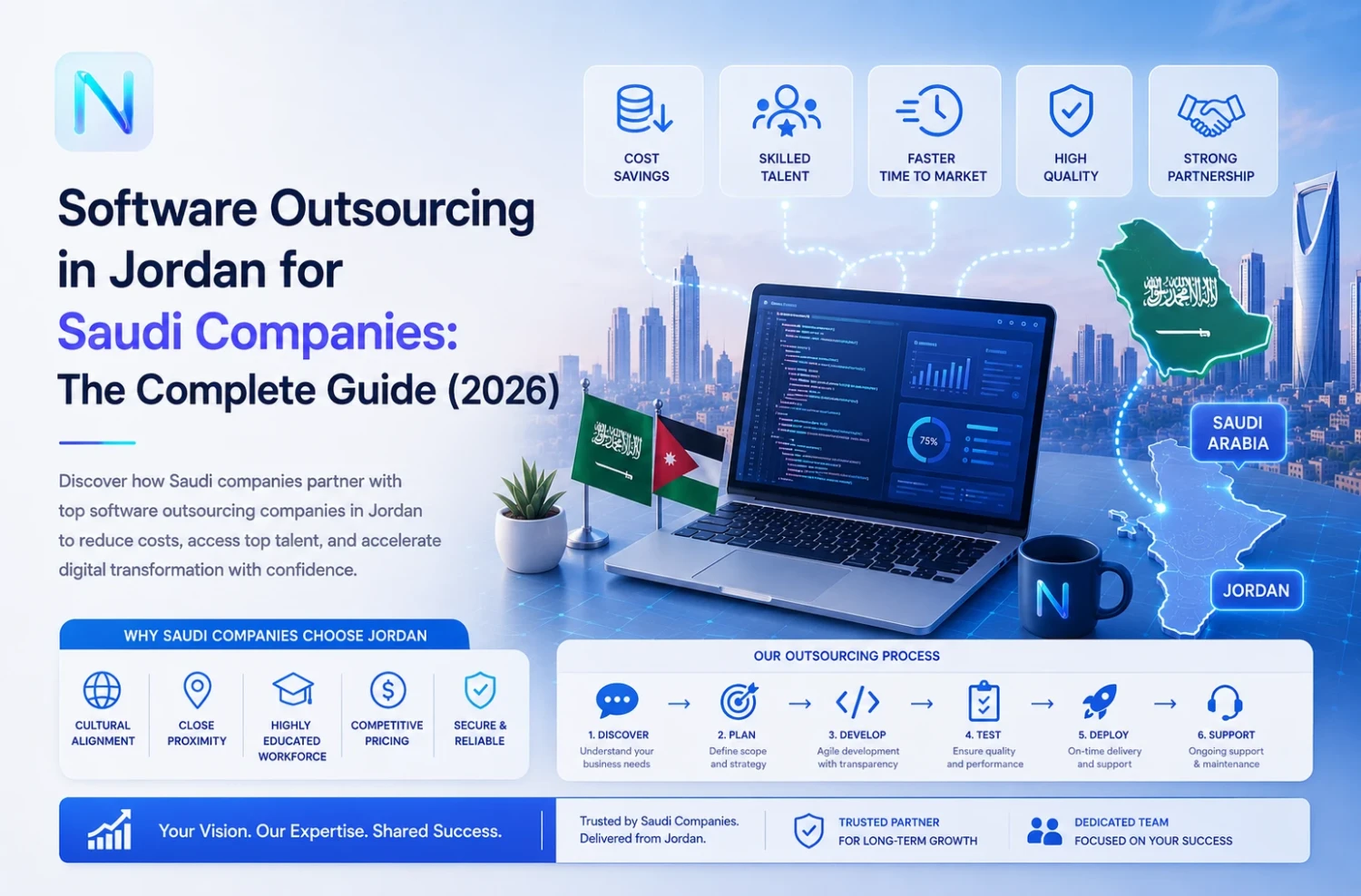
Strong Outsourcing Ecosystem
Many regional and international companies outsource software development to Jordan because of:
- Experienced development teams
- Agile methodologies
- Competitive pricing
- High technical standards
- Long-term support capabilities
Jordan continues to strengthen its position as a trusted software outsourcing destination.
How to Reduce Software Development Costs
Reducing software costs does not mean sacrificing quality. Instead, businesses should focus on smarter planning and efficient execution.
Start with an MVP (Minimum Viable Product)
Launching an MVP allows businesses to release essential features first, gather user feedback, and expand the software gradually.
Benefits include:
- Lower initial investment
- Faster launch
- Reduced project risk
- Better product validation
Prioritize Features
Not every feature needs to be developed in the first release.
Classify features into:
- Must Have
- Should Have
- Nice to Have
- Future Enhancements
Prioritization helps control both cost and development time.
Reuse Existing APIs
Instead of building every feature from scratch, integrate reliable third-party services where appropriate.
Examples include:
- Payment Gateways
- SMS Providers
- Email Services
- Google Maps
- Authentication Services
- Cloud Storage
Using established APIs reduces development effort and speeds up delivery.
Choose Scalable Architecture
Investing in scalable architecture from the beginning reduces future redevelopment costs as your business grows.
A scalable system can accommodate:
- More users
- Additional modules
- New branches
- Higher transaction volumes
Plan Integrations Early
Defining required integrations during the planning phase helps avoid expensive redesigns later in the project.
Avoid Scope Creep
Frequent changes to requirements during development often increase both cost and delivery time.
A well-defined project scope minimizes unnecessary changes and keeps development on schedule.
Common Budgeting Mistakes
Many software projects exceed budget because of avoidable planning mistakes.
Skipping the Discovery Phase
Starting development without understanding business requirements often leads to redesigns, delays, and increased costs.
Undefined Requirements
Incomplete or changing requirements create confusion and additional development work.
Clear documentation before development begins helps control budget and timeline.
Ignoring Maintenance Costs
Software requires ongoing maintenance after launch.
Businesses should allocate budget for:
- Updates
- Security patches
- Monitoring
- Technical support
- Performance optimization
Choosing the Cheapest Proposal
Selecting a software development company based only on price can lead to poor quality, technical debt, project delays, and higher long-term costs.
Value, experience, communication, and technical expertise should all be considered when evaluating proposals.
Underestimating Integrations
Third-party integrations often require additional planning, testing, licensing, and maintenance.
Ignoring these costs can significantly affect the final project budget.
Frequent Scope Changes
Adding major features after development has started usually increases both cost and timeline.
Businesses should establish priorities early and manage change requests carefully.
By understanding these budgeting principles, businesses can control costs, reduce project risks, and maximize the value of their software investment.
Why Choose Neion Tech?
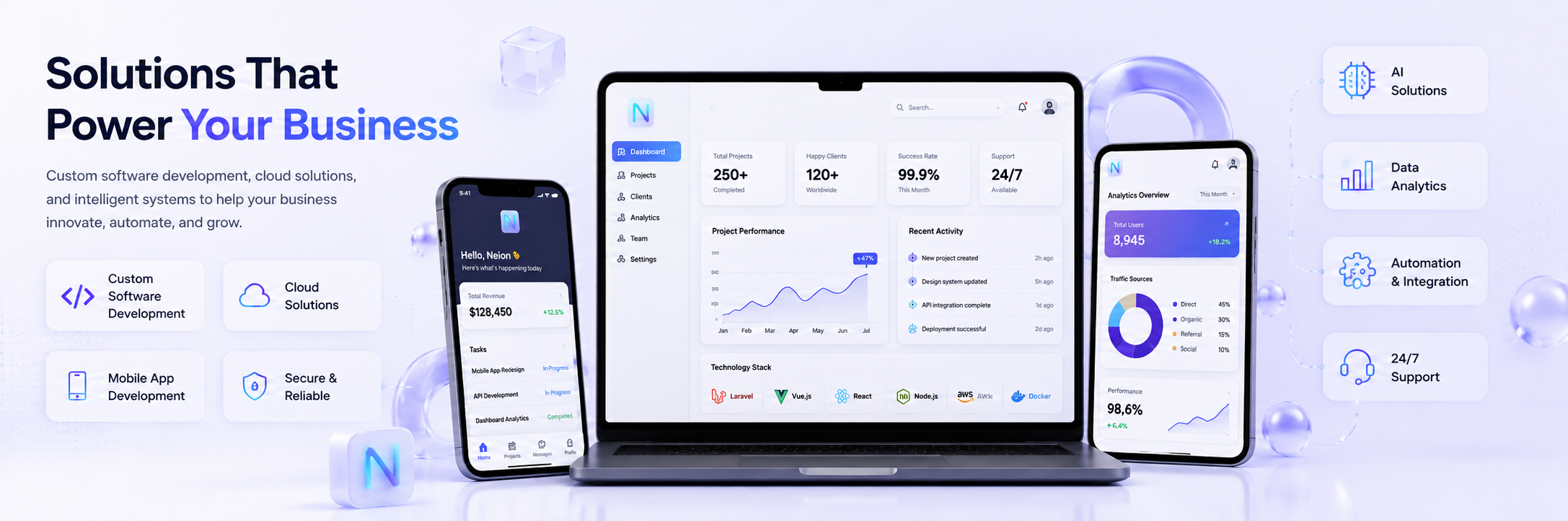
Choosing the right software development company is just as important as choosing the right technology. At Neion Tech, we help businesses across Jordan and the GCC transform ideas into secure, scalable, and high-performance software solutions that support long-term growth.
Our team combines technical expertise with business understanding to build software tailored to your organization's goals, workflows, and future expansion plans.
Our software development services include:
- Custom Software Development
- Web Application Development
- Mobile Application Development
- ERP Development
- CRM Development
- SaaS Platform Development
- API Development & Integration
- UI/UX Design
- Cloud Deployment
- DevOps Services
- Legacy System Modernization
- AI-Powered Business Solutions
- Software Maintenance & Support
Every project begins with a detailed business analysis to ensure the final solution aligns with your operational requirements, improves productivity, and delivers measurable business value.
Whether you're a startup building your first MVP or an enterprise replacing legacy systems, our team delivers modern software that is secure, scalable, and built for long-term success.
Frequently Asked Questions
How much does software development cost in Jordan?
Software development costs vary depending on project scope, business requirements, integrations, security needs, and the number of features. Every custom software project is priced based on its specific requirements rather than a fixed market rate.
Why do software development prices vary so much?
Every business has unique workflows, goals, and technical requirements. Factors such as project complexity, integrations, cloud infrastructure, mobile applications, AI features, and scalability all influence the total development cost.
Is custom software worth the investment?
Yes. Custom software is designed specifically for your business, allowing you to automate processes, improve efficiency, reduce manual work, and support future growth. Over time, many businesses achieve a strong return on investment through increased productivity and lower operating costs.
What factors affect software development pricing?
The main factors include:
- Business requirements
- Number of features
- User roles
- API integrations
- Mobile applications
- Security requirements
- Cloud infrastructure
- Artificial intelligence
- Reporting
- Scalability
- Ongoing maintenance
How long does software development take?
The timeline depends on project complexity.
Typical estimates are:
- Business Website: 2–6 weeks
- Corporate Website: 4–8 weeks
- Web Application: 3–6 months
- Mobile Application: 3–8 months
- CRM System: 3–6 months
- ERP System: 6–12 months
- Enterprise Platform: 9–18 months
Which pricing model is best?
It depends on your project.
- Fixed Price is suitable for projects with clearly defined requirements.
- Time & Materials is ideal for projects that require flexibility and ongoing improvements.
- Dedicated Team works best for long-term software development and enterprise products.
What is included in software development costs?
A professional software development project may include:
- Business Analysis
- UI/UX Design
- Frontend Development
- Backend Development
- Database Design
- API Integration
- Quality Assurance (QA)
- Testing
- Deployment
- Documentation
- User Training
The exact scope depends on the project's requirements.
Are maintenance costs included?
Maintenance is typically offered as a separate ongoing service after launch. It may include bug fixes, security updates, server monitoring, backups, performance optimization, and feature enhancements.
Can I start with an MVP?
Yes. Developing a Minimum Viable Product (MVP) is one of the most effective ways to reduce initial investment, validate your business idea, and launch your product faster before expanding with additional features.
How much does ERP development cost?
ERP development costs depend on the number of modules, users, integrations, workflow complexity, reporting requirements, and business processes. A detailed discovery phase is recommended before estimating the investment.
How much does CRM development cost?
CRM development pricing depends on the required modules, automation workflows, integrations, mobile applications, AI capabilities, and reporting features. Each CRM project is tailored to the specific needs of the business.
Can software development costs be reduced?
Yes. Businesses can optimize their software investment by:
- Starting with an MVP
- Prioritizing essential features
- Reusing existing APIs
- Choosing scalable architecture
- Planning integrations early
- Avoiding unnecessary scope changes
Conclusion
Software development should not be viewed simply as a business expense—it is a strategic investment that helps organizations improve efficiency, automate operations, enhance customer experiences, and create new opportunities for growth.
While software development costs in Jordan vary depending on project size, complexity, and technical requirements, businesses benefit from access to experienced engineering teams, competitive pricing, and high-quality solutions that meet international standards. By carefully defining project requirements, selecting the appropriate development model, and working with an experienced software development company, organizations can maximize the value of their investment and reduce long-term operational costs.
If your business is planning a new website, mobile application, ERP system, CRM platform, SaaS product, or enterprise software solution in 2026, partnering with an experienced software development company in Jordan will help you build a secure, scalable, and future-ready solution tailored to your business goals. At Neion Tech, we specialize in delivering custom software solutions for businesses across Jordan and the GCC, combining technical excellence with a deep understanding of regional business needs to support long-term digital transformation and sustainable growth.
Leave a comments:
Comments: