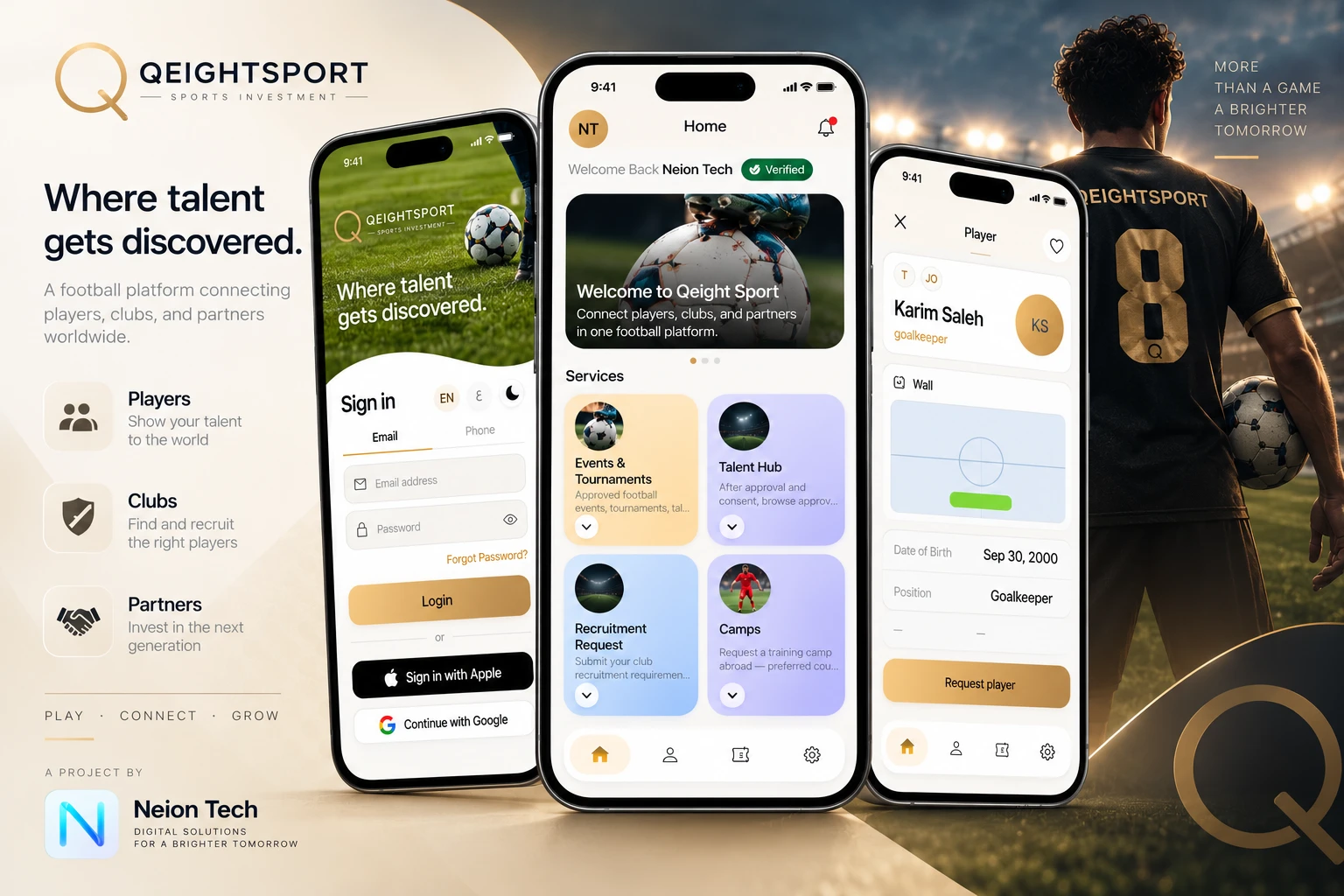
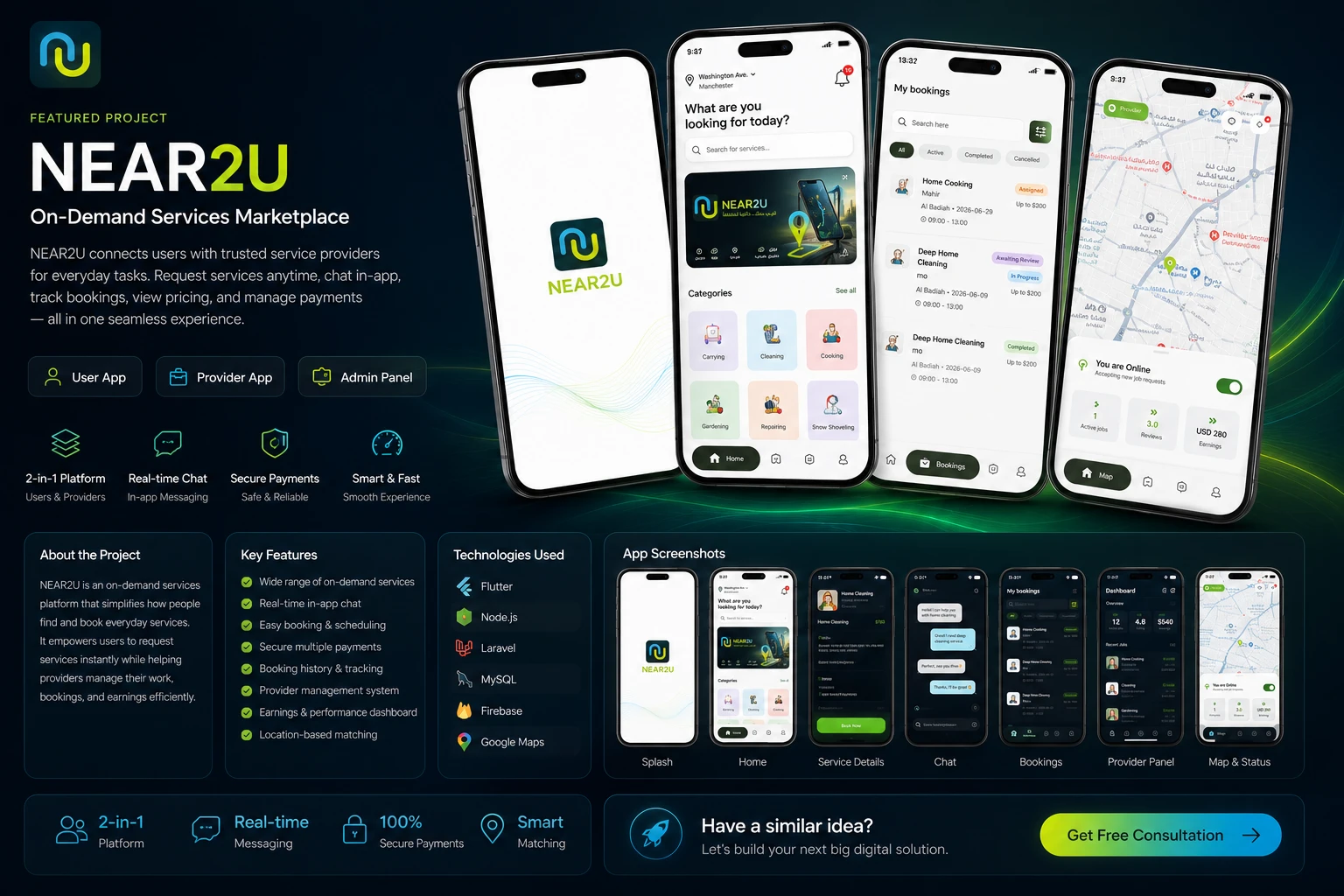
We plan and build mobile applications around the product journeys your customers or staff need to complete. The project scope can include app interfaces, backend APIs, admin workflows, required integrations, testing and release preparation.
Define the product behind the app screens
An app project includes the actions people complete, the information they use and the systems behind each screen. A customer account, staff approval or payment journey can involve the mobile interface, backend rules, an external provider and administrative tools.
Describe the first complete journey your users need. This makes it easier to identify which functions belong in the first release and which can follow once that journey works.
What your app project can deliver
| Deliverable |
What to define before development |
| App journeys and design |
User roles, screen states, Arabic/English layouts and review responsibilities |
| Android and iOS implementation |
Supported platforms/devices and any platform-specific functions |
| Backend and administration |
APIs, data records, account permissions, moderation and operational actions |
| External services |
Authentication, notifications, maps, payments or messaging actually required |
| Testing |
Critical journeys, device coverage, connectivity failures and acceptance criteria |
| Release preparation |
Builds, listing materials, privacy information and submission responsibilities |
| Handover |
Agreed code, account access, build/deployment instructions and maintenance arrangements |
The proposal should identify which of these are included and whether your existing backend or developer accounts will be used. Store approval and provider access are separate dependencies to plan.
Compare three possible first-release scopes
A customer app using an existing backend
Users sign in, view information and complete defined account actions through documented APIs. Confirm whether those APIs already support the app journeys; an available website does not establish that mobile-ready APIs exist.
A profile or membership platform
Users create profiles while administrators review or manage records. Define required fields, visibility rules, verification, editing permissions and notification behaviour alongside the app screens.
A service platform with different user roles
Customers and providers may need different journeys, with requests, status changes and staff oversight. Payments, maps or messaging add requirements only when the product needs them and provider access is available.
These examples show differences in scope, not fixed packages or quoted delivery periods.
Choose platforms and technology around the requirements
An Android and iOS project can use a shared-code approach such as Flutter where appropriate. Platform-specific behaviour still needs review for device functions, permissions, background work and external integrations.
Language planning should include forms, errors and notifications, not only translated labels. If offline use is required, define which information is available without a connection, which actions can be saved and how the app handles synchronisation when connectivity returns.
Agree what successful behaviour looks like
For a profile-registration journey, specify the required information, validation, verification, account status and what the user sees when a step fails. If staff approval is needed, define what the applicant can access before and after approval.
For a notification feature, specify the event that creates it, the intended recipient and the in-app destination. Device permissions and delivery conditions matter; a notification button alone is not a complete acceptance check.
Understand cost and the path to release
The estimate reflects user roles, journeys, screen states, backend work, integrations, design, device testing and release responsibilities. Reusing a suitable backend can reduce the new work, while incomplete APIs or changing provider requirements can add work.
Plan the schedule around scope confirmation, interface review, integrated development, device testing and release preparation. Include your team's content and account readiness, feedback and external review dependencies. A development completion date and a store approval date are not the same milestone.
Separate development costs from hosting, maintenance, developer accounts and provider usage charges. State whether future releases, operating-system updates and additional integrations are included or quoted later.
Keep ownership and release accounts clear
Agree who owns or licenses the custom code, who controls the app identifiers and developer accounts, and what is delivered at handover. Define access to the backend, signing/build materials and external-service accounts according to the agreed responsibilities.
For submission, assign the listing text, screenshots, privacy information and review responses. Apple and Google decide approval and review timing. After release, distinguish defect correction from ongoing maintenance and new features, with support terms documented in the agreement.
Prepare your app brief
Share the users, first-release journeys, required platforms, languages and existing systems. Include any available API documentation, account readiness, provider requirements and preferred launch window.
For questions to ask while comparing development partners, use our app-development buyer's guide. For a product that may combine web, mobile and business systems, use the development service guide.
Frequently asked questions
Yes. The proposal should identify both supported platforms, the development approach and any platform-specific work, testing or release responsibilities.
Not always. A suitable existing API may be reused after assessment. Otherwise backend functions and administration need to be included explicitly in the scope.
Define the smallest complete user journey that meets the first-release objective. Supporting account, data and administrative requirements still need to be included for that journey to work.
Offline behaviour must be defined. Agree the information and actions available without connectivity, storage requirements and how later synchronisation is handled.
The agreement should identify defect correction, app/backend maintenance, operating-system updates, hosting and later features separately, with the relevant periods and fees.
Discuss your app project
Tell us who will use the app and what the first release must allow them to complete. Discuss your app project with Neion Tech to review the scope, dependencies and next steps.
Independent reviews
Neion Tech on Clutch
Explore Neion Tech’s Clutch profile for company information and reviews available on the platform.
View Neion Tech on Clutch
Ratings reflect published Clutch client feedback when displayed, not every project we deliver. We welcome honest reviews after completed engagements.