Make responsibilities clear in document-heavy workflows
When requests arrive through email and shared folders, it can be difficult to know which version is current or which action is still waiting for approval. A custom portal can organize submissions, required documents and review steps around a defined process.
The design starts with responsibility. Some users may submit information, others may review it, and a separate role may approve the outcome. We document those boundaries before building the interface.
What we can include in the solution
Document and approval portals
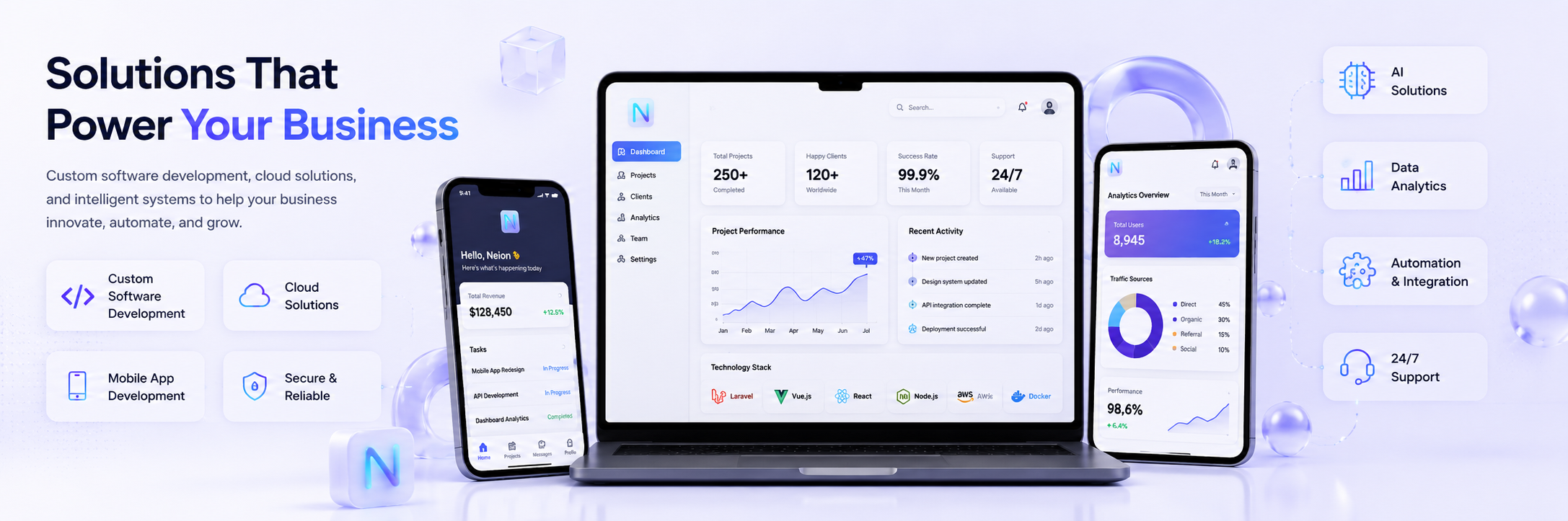
A portal can collect requests and files, identify incomplete submissions and direct the next action to the appropriate role. Document version handling, status changes and notifications are specified according to the workflow.
Internal applications and administration
A business application can bring requests, customer records and operational tasks into a shared system. Management functions may include review queues, configuration and reports, while permissions restrict access to the information needed for each role.
APIs and connected services
Where existing systems expose suitable interfaces, we can scope connections that exchange agreed records or status updates. We review authentication, allowed access, response formats and failure behavior before defining the implementation.
Explore custom software development services
Security requirements belong in the scope
We discuss access control, account handling, activity records and the data the system must store. If your business has specific retention, hosting, contractual or sector requirements, those are documented with the responsible stakeholders before architecture decisions are finalized.
Security testing should be tied to the functions actually being delivered, such as ensuring that one user cannot view another user's restricted files. Building permission controls and audit history does not by itself establish regulatory compliance; any required assessment or approval must be part of a separately defined requirement.
A proposed workflow: reviewing partner submissions
A partner could submit a request and supporting files through a portal. A reviewer would check the information and ask for corrections. An authorized approver would record the decision, while the partner sees the agreed outcome and status information.
The first-release scope would define who can revise a submission, whether previous versions remain accessible and which actions appear in the activity history. This example is useful for planning the roles and exceptions your own process needs.
Testing and handover
We develop against agreed screens, business rules and acceptance criteria. Your reviewers can verify that a request follows the intended path and that permissions match their responsibilities.
Testing includes incomplete submissions, restricted access, document handling and integration failures. Deployment settings, handover materials, training requirements and maintenance responsibilities are defined in the proposal. Any additional security review or specialist assessment is identified during planning.
Review our published work
WINDS presents a corporate logistics website. NEAR2U presents a multi-service marketplace. Use the published project details to discuss the difference between a public website and an application with several user roles and administration functions.
Quotation inputs
The price depends on the number and complexity of workflows, document handling, user roles, design, integrations and testing. Requirements for migration, infrastructure or additional assessments also affect scope. We prepare a project-specific quotation after discovery and identify recurring hosting, maintenance and external-service costs where applicable.
Relevant Services


Frequently Asked Questions | Neion Tech - Your Questions Answered
Q1. Is Neion Tech based in Bahrain?
Neion Tech is based in Amman, Jordan. We organize remote delivery for businesses serving Bahrain and agree on project communication and review stages.
Q2. Can different users submit, review and approve a request?
Yes. Those roles and their permissions can be included in scope. The business must define the authority and conditions associated with each action.
Q3. Can the system keep a history of actions?
Activity history can record the agreed events, such as submission, status changes and approvals. The exact information retained and who may access it are specified during discovery.
Q4. Does a portal automatically meet sector compliance requirements?
No automatic compliance claim is made. Your responsible stakeholders identify the applicable obligations, and any implementation, review or approval requirements must be explicitly included in scope.
Q5. Can you connect to an existing third-party system?
We first assess its documentation, access permissions and test environment. The available interfaces and provider requirements determine what can be connected.
Define the process before the platform
Share the documents, review steps and access rules your system must support. We will use them to plan an application with clear responsibilities.