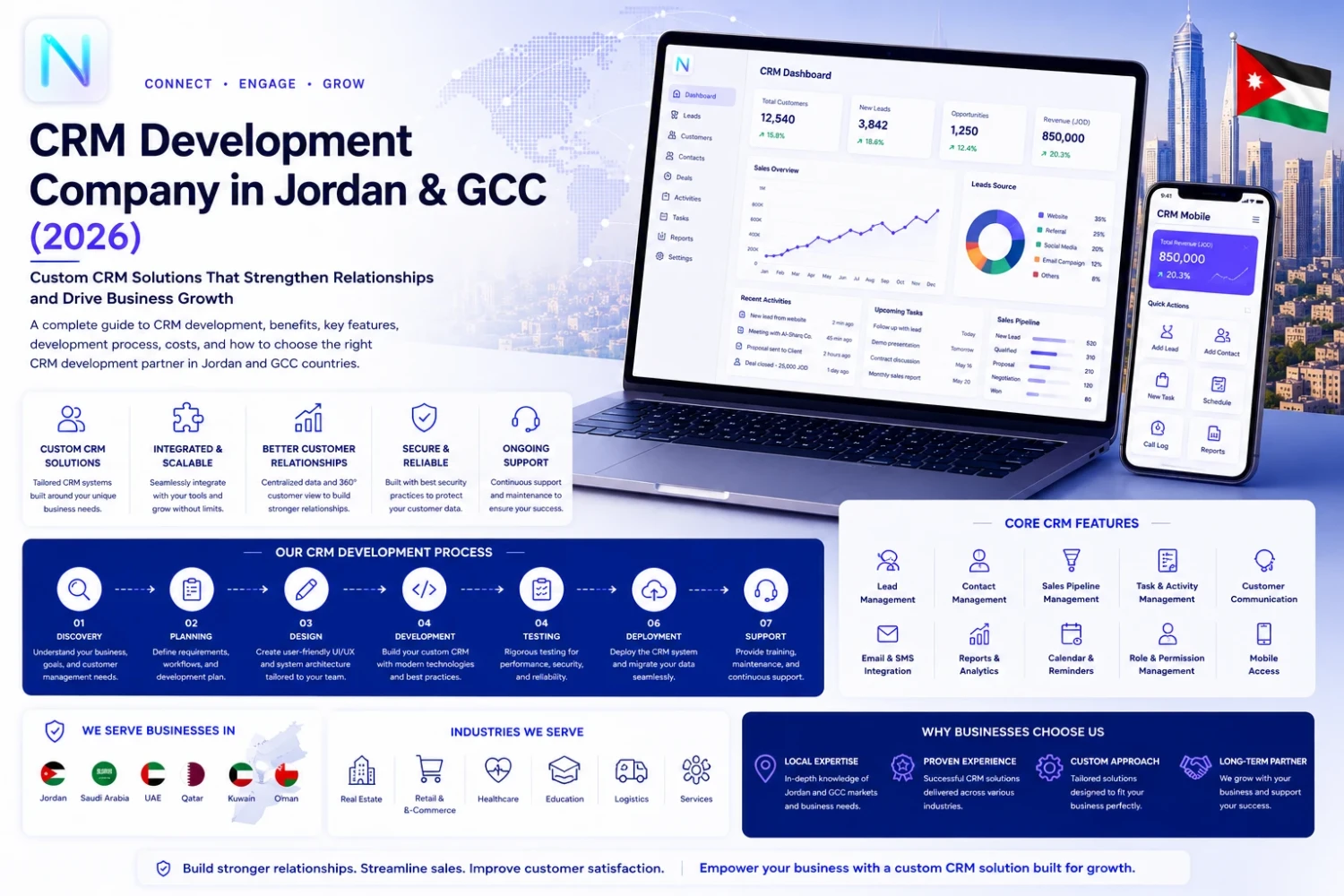
Customer relationships have become one of the most valuable assets for modern businesses. Companies across Jordan and the GCC are increasingly investing in Customer Relationship Management (CRM) systems to improve customer experiences, streamline sales processes, automate marketing activities, and strengthen long-term customer loyalty.
Whether you operate a startup, SME, or large enterprise in Jordan, Saudi Arabia, the UAE, Qatar, Kuwait, Bahrain, or Oman, implementing a custom CRM solution can significantly improve productivity, increase sales, and enhance customer satisfaction.
Choosing the right CRM development company in Jordan is one of the most important technology decisions your business can make. A successful CRM implementation depends not only on software features but also on business process analysis, user experience design, system integrations, automation, employee adoption, and ongoing technical support.
This complete guide explains everything businesses need to know before investing in a custom CRM system in 2026.
What is CRM?
Customer Relationship Management (CRM) is software designed to help businesses manage customer interactions, sales activities, marketing campaigns, customer support, and communication from one centralized platform.
Instead of storing customer information across spreadsheets, emails, messaging applications, and separate software, a CRM system creates a single source of truth that allows every department to access accurate and up-to-date customer information.
A modern CRM system typically manages:
- Leads
- Contacts
- Customers
- Sales Opportunities
- Quotations
- Tasks
- Meetings
- Marketing Campaigns
- Customer Support
- Customer Communication
- Documents
- Reports
- Dashboards
Every interaction with a customer is recorded within the system, enabling sales teams, customer service representatives, and management to collaborate more effectively.
Why Businesses Need CRM Software
As businesses grow, managing customer relationships manually becomes increasingly difficult.
Many organizations experience problems such as:
- Lost sales opportunities
- Slow follow-ups
- Duplicate customer records
- Poor communication between departments
- Missed appointments
- Lack of sales visibility
- Inaccurate reports
- Weak customer retention
- Manual sales processes
- Limited performance tracking
A CRM system solves these challenges by organizing customer information, automating repetitive tasks, and providing complete visibility into the customer journey.
Benefits of Custom CRM Development
Unlike off-the-shelf CRM platforms, a custom CRM system is built specifically around your business processes.
Key benefits include:
Centralized Customer Database
Store all customer information in one secure location.
Better Lead Management
Track every lead from the first inquiry until conversion.
Increased Sales Productivity
Sales teams spend less time on administrative work and more time selling.
Automated Follow-ups
Customer Segmentation
Group customers based on location, industry, purchasing behavior, or any custom criteria.
Improved Customer Service
Support teams can instantly access complete customer history.
Real-Time Analytics
Management gains access to accurate dashboards and performance reports.
Higher Customer Retention
Build stronger relationships through personalized communication and proactive engagement.
Mobile Accessibility
Access customer information anytime using smartphones and tablets.
Business Scalability
Expand the CRM system as your business grows without replacing existing software.
Core CRM Modules
A modern CRM platform generally includes multiple integrated modules.
Lead Management
Track every lead through the sales funnel.
Contact Management
Maintain detailed customer profiles including:
- Contact information
- Company details
- Purchase history
- Communication history
- Notes
- Documents
Opportunity Management
Manage sales opportunities from initial inquiry through contract signing.
Monitor:
- Probability
- Expected revenue
- Sales stage
- Estimated closing date
Sales Pipeline
Visualize sales progress using customizable pipelines.
Track:
- New Leads
- Qualified Leads
- Proposal Sent
- Negotiation
- Closed Won
- Closed Lost
Quotations
Generate professional quotations directly from CRM.
Track:
- Status
- Approval
- Expiration
- Customer Acceptance
Customer Management
Maintain complete customer records including:
- Previous purchases
- Support tickets
- Payments
- Contracts
- Projects
- Communications
Marketing Automation
Automate:
- Email campaigns
- SMS campaigns
- Lead nurturing
- Promotional offers
- Customer journeys
- Send notifications
- Follow up with leads
- Share quotations
- Receive inquiries
- Manage conversations
Email Integration
Connect with Gmail, Outlook, Microsoft 365, or other email providers.
Automatically log emails under customer profiles.
Calendar & Meetings
Schedule:
- Meetings
- Calls
- Follow-ups
- Demonstrations
- Visits
Receive automatic reminders.
Task Management
Assign tasks to employees and monitor progress using deadlines, priorities, and status updates.
Customer Support
Manage:
- Support tickets
- Complaints
- Service requests
- Warranty cases
- Escalations
Reports & Dashboards
Monitor key business metrics including:
- Lead conversion rates
- Sales performance
- Revenue forecasts
- Customer acquisition
- Customer retention
- Sales team productivity
Advanced CRM Features
Modern CRM systems include advanced capabilities such as:
- AI-powered Lead Scoring
- Sales Forecasting
- Customer Journey Tracking
- Activity Timeline
- Workflow Automation
- Custom Approval Processes
- Electronic Signatures
- Document Management
- API Integrations
- Mobile CRM Applications
- Cloud Deployment
- Multi-language Support
- Multi-company Management
- Multi-branch Operations
- Role-Based Permissions
Industries That Benefit from CRM
Custom CRM software can be tailored for virtually any industry.
Common industries include:
- Healthcare
- Manufacturing
- Logistics
- Retail
- Construction
- Real Estate
- Education
- Hospitality
- Financial Services
- Insurance
- Automotive
- Government
- Professional Services
- Travel & Tourism
- E-Commerce
Each industry has unique workflows, making custom CRM development a valuable investment.
CRM vs ERP
Many businesses confuse CRM and ERP systems.
A CRM focuses primarily on customer-facing activities, while ERP manages internal business operations.
CRM manages:
- Leads
- Customers
- Sales
- Marketing
- Customer Service
ERP manages:
- Finance
- Inventory
- Procurement
- Manufacturing
- HR
- Payroll
- Accounting
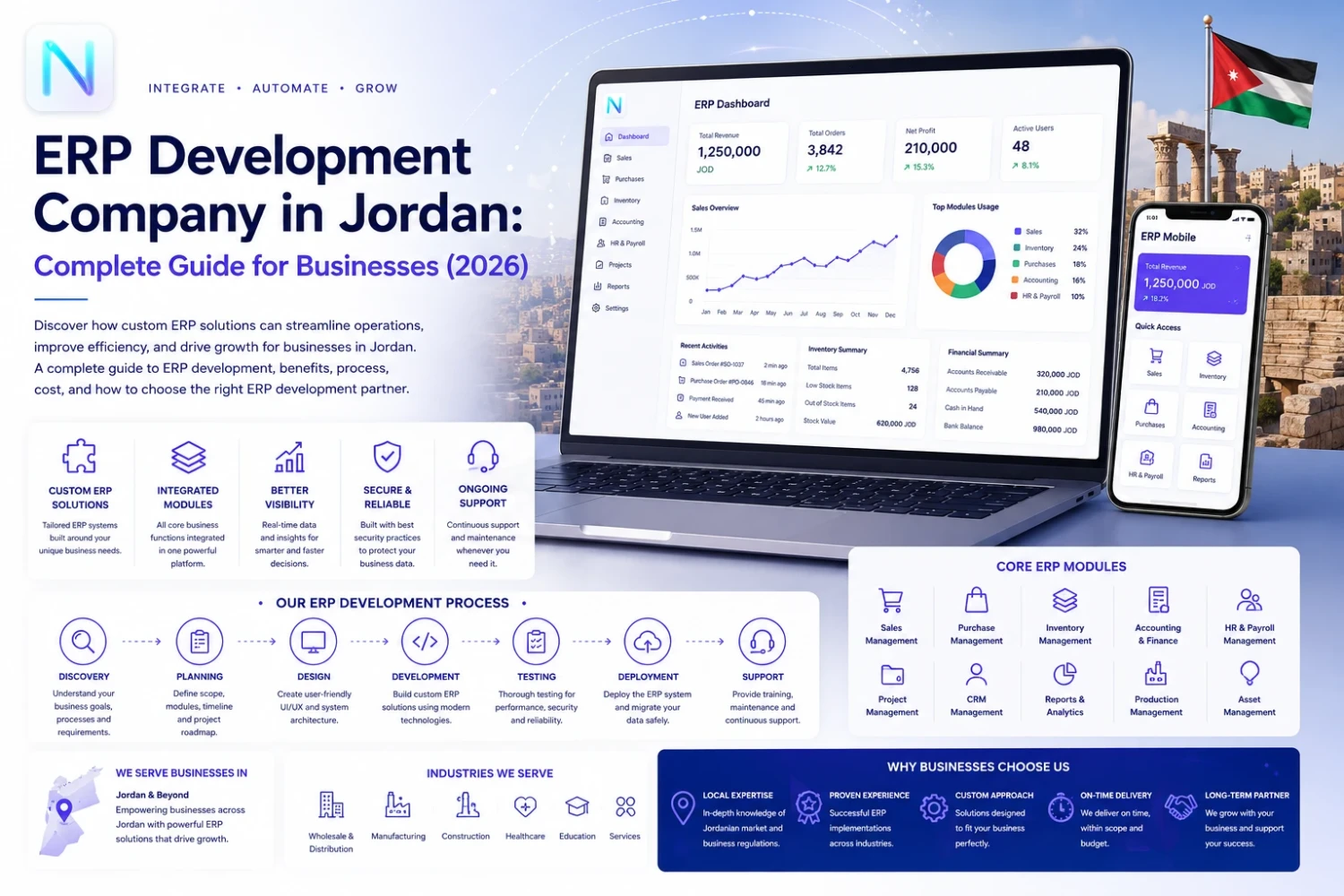
Many organizations integrate CRM and ERP to create a complete digital ecosystem where customer information flows seamlessly into operational processes.
CRM Development Process
Professional CRM development typically follows these stages.
1. Discovery
Understand business objectives and existing processes.
2. Business Analysis
Identify pain points and workflow improvements.
3. UI/UX Design
Create intuitive and user-friendly interfaces.
4. System Architecture
Design scalable technical architecture.
5. CRM Development
Develop required modules and custom features.
6. API Integration
7. Testing
Perform functional, security, usability, and performance testing.
8. Data Migration
Import customer records from existing software or spreadsheets.
9. User Training
Train administrators, sales teams, customer service representatives, and management.
10. Deployment & Support
Launch the system and provide continuous maintenance, enhancements, and technical support.
CRM Integrations
A modern CRM platform can integrate with:
- ERP Systems
- Accounting Software
- Payment Gateways
- WhatsApp Business API
- SMS Gateways
- Email Providers
- Google Calendar
- Microsoft 365
- Outlook
- Slack
- E-Commerce Platforms
- Point of Sale (POS)
- Social Media Platforms
- Chatbots
- AI Assistants
- Government APIs
These integrations eliminate duplicate work and improve operational efficiency.
Technologies Used for CRM Development
Modern CRM systems are built using scalable technologies.
Backend:
- Laravel
- ASP.NET Core
- Node.js
- Java
Frontend:
- Vue.js
- React
- Angular
Database:
- PostgreSQL
- MySQL
- SQL Server
Cloud:
- AWS
- Microsoft Azure
- Google Cloud Platform
Mobile:
- Flutter
- React Native
These technologies ensure high performance, scalability, and security.
CRM Security
Customer data is one of the most valuable assets for any business.
A secure CRM should include:
- Multi-Factor Authentication (MFA)
- End-to-End Encryption
- Role-Based Access Control
- Audit Logs
- Secure APIs
- Automatic Backups
- Disaster Recovery
- Activity Monitoring
- Password Policies
- Data Export Controls
Security should be considered from the earliest stages of CRM development.
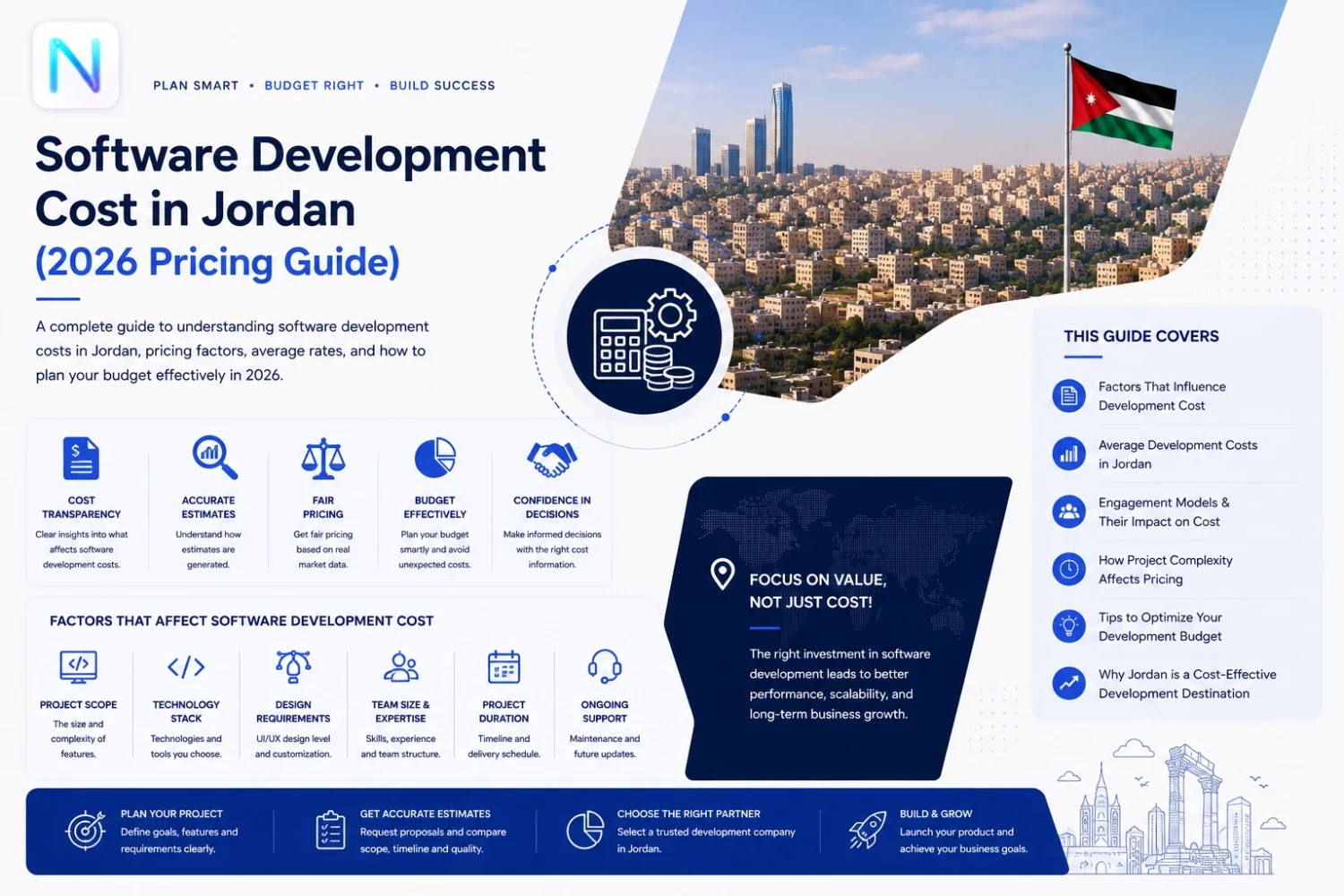
CRM Development Cost in Jordan
The cost of developing a CRM system depends on several factors, including:
- Number of users
- Required modules
- Business complexity
- Workflow automation
- Third-party integrations
- Mobile applications
- AI capabilities
- Reporting requirements
- Cloud infrastructure
- Long-term maintenance
Since every business has unique requirements, CRM development costs vary significantly from one project to another.
CRM Trends in 2026
The future of CRM is being shaped by artificial intelligence, automation, and cloud technologies.
Key trends include:
- AI-powered customer insights
- Predictive sales analytics
- Intelligent lead scoring
- Conversational AI assistants
- Voice-enabled CRM
- Omnichannel communication
- Automated workflows
- Customer self-service portals
- Mobile-first CRM
- Cloud-native CRM platforms
- Low-code customization
- Real-time business intelligence
Businesses adopting these innovations gain a competitive advantage by improving customer engagement and operational efficiency.
Why Choose Neion Tech?
Neion Tech specializes in developing custom CRM solutions for businesses across Jordan and GCC countries.
Our CRM development services include:
- CRM Consulting
- Business Process Analysis
- Custom CRM Development
- Sales Automation
- Workflow Automation
- WhatsApp Business Integration
- API Development & Integration
- Mobile CRM Applications
- Cloud Deployment
- CRM Modernization
- System Migration
- Long-Term Technical Support
Every CRM solution we develop is tailored to your organization's workflows, helping you improve sales performance, strengthen customer relationships, automate repetitive processes, and support long-term business growth.
Frequently Asked Questions
What is CRM software?
CRM software helps businesses manage customer relationships, sales activities, marketing campaigns, and customer support from one centralized platform.
How long does CRM development take?
Most custom CRM projects take between 2 and 8 months depending on the required features and integrations.
Is custom CRM better than ready-made CRM?
Custom CRM is ideal for businesses with unique workflows, industry-specific requirements, or complex integrations that standard CRM platforms cannot fully support.
Can CRM integrate with ERP?
Yes. CRM systems can integrate with ERP software to synchronize customer information, sales orders, invoices, inventory, and financial data.
Can CRM support mobile devices?
Yes. CRM platforms can provide responsive web interfaces and dedicated Android and iOS applications.
Is CRM suitable for small businesses?
Absolutely. CRM systems can be customized to meet the needs of startups, SMEs, and large enterprises.
Can CRM automate sales processes?
Yes. CRM software can automate lead assignments, follow-ups, reminders, quotations, approvals, and sales workflows.
Can CRM integrate with accounting software?
Yes. CRM can connect with accounting systems to synchronize invoices, payments, and customer financial information.
Can CRM manage customer support?
Yes. CRM platforms often include ticketing systems, complaint management, and customer service workflows.
Conclusion
A modern CRM system is much more than a customer database—it is the foundation of successful sales, marketing, and customer service operations. By centralizing customer information, automating repetitive tasks, and integrating with the tools your business already uses, a custom CRM empowers your team to build stronger relationships, close more deals, and deliver exceptional customer experiences.
If your organization is planning digital transformation in 2026, partnering with an experienced CRM development company in Jordan can help you build a secure, scalable, and fully customized CRM solution that supports sustainable growth across Jordan and the GCC.
Leave a comments:
Comments: