
Publisher disclosure: This guide is published by Neion Tech, a software development company based in Jordan. It explains how to evaluate development partners and is not an independent ranking of app development companies.
Choosing a mobile app development company in Jordan starts with checking whether the team can deliver your particular product. Relevant project experience, a clear written scope, access to your source code and accounts, and a workable support arrangement are more useful than an unsupported claim to be the “best” provider.
Before comparing prices, write down who will use the app, what those users need to accomplish, and which systems it must connect to. Ask each company to quote against the same brief so that you can compare the work included, rather than the total price alone.
1. Define the first version before requesting proposals
A short project brief helps developers identify missing requirements and prepare a meaningful proposal. Include:
- Your business objective and the problem the app should solve.
- User roles, such as customers, staff, service providers or administrators.
- The essential journeys, from registration to completing the main task.
- Required platforms: Android, iOS, or both.
- Arabic and English requirements, including right-to-left layouts.
- Existing systems, available APIs and data that may need migration.
- Payments, maps, notifications, messaging or other external services.
- Your preferred launch window and any fixed dependencies.
Separate the functions needed for the first release from ideas that can follow later. A smaller, clearly defined release is easier to estimate and review than a broad feature list with unresolved details.
2. Check relevant work beyond screenshots
A polished screen demonstrates visual design, but it does not establish how an application works. Ask the company to explain a project with similar user roles, integrations or operational requirements.
Useful evidence includes a product demonstration, a detailed case study, an available public product link and an explanation of the team's actual responsibilities. Confirm whether the team built the mobile app, backend, administration panel and integrations, or only part of the product.
An example from Neion Tech: The QEightSport project documents a football talent platform with player, club and partner workflows, mobile development and backend administration. Use it as an example of the delivery scope to examine when evaluating a connected mobile product. It does not establish a price, timeline or outcome for a different project.
3. Compare proposals against the same scope
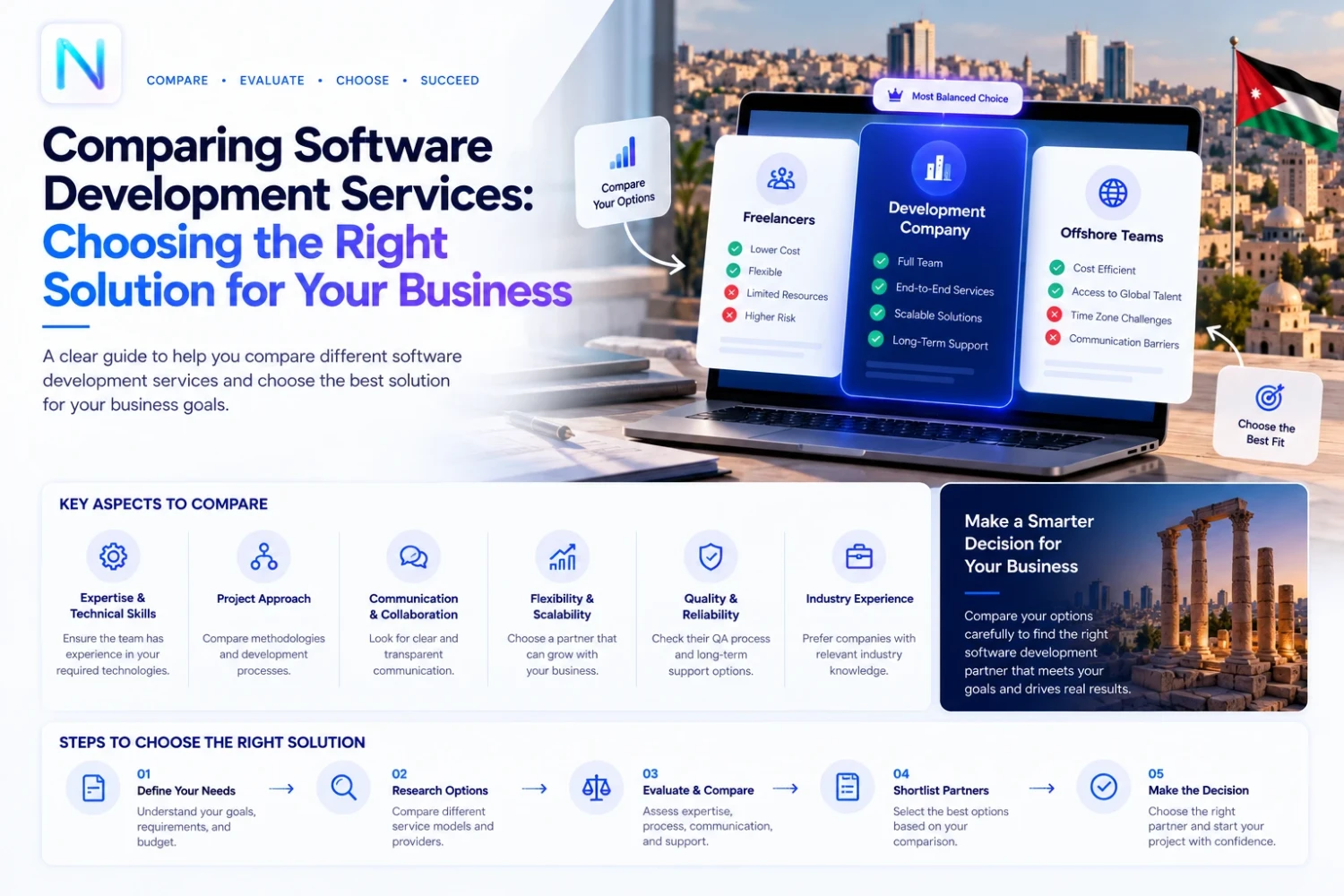
Two quotations can describe an “app” while covering very different work. Use the following comparison checklist for every provider:
| Area | What to confirm |
|---|---|
| Product scope | Included user journeys, roles, screens and exclusions |
| Design | Wireframes, interface design, language layouts and review rounds |
| Mobile development | Supported platforms, device assumptions and platform-specific work |
| Backend and administration | APIs, permissions, dashboards, reporting and data management |
| Integrations | Named providers, available documentation, account access and responsibilities |
| Testing | Critical workflows, supported devices, error handling and acceptance criteria |
| Release | Build preparation, store materials and submission responsibilities |
| Handover and support | Source code, accounts, documentation, warranty terms and maintenance |
A low price may cover a narrow scope; a higher price may include substantial backend or integration work. Ask for clarification whenever a deliverable is missing or described only as “included.”
4. Understand what affects app development cost and timing
There is no single cost or delivery period that applies to every mobile application. Estimates depend on the work involved: user roles, screen states, backend logic, design requirements, integrations, data migration, testing and release preparation.
For example, an app that displays content from an existing system has a different scope from a marketplace with customer and provider accounts, payments and operational administration. External account approvals, unavailable APIs and late content can also affect the schedule.
Ask for development costs and recurring costs to be shown separately. Hosting, maintenance, developer accounts, payment services, messaging and other providers may have their own charges. Confirm which costs are included, who pays them and how changes to the agreed scope are quoted.
5. Assess Arabic, English and platform requirements
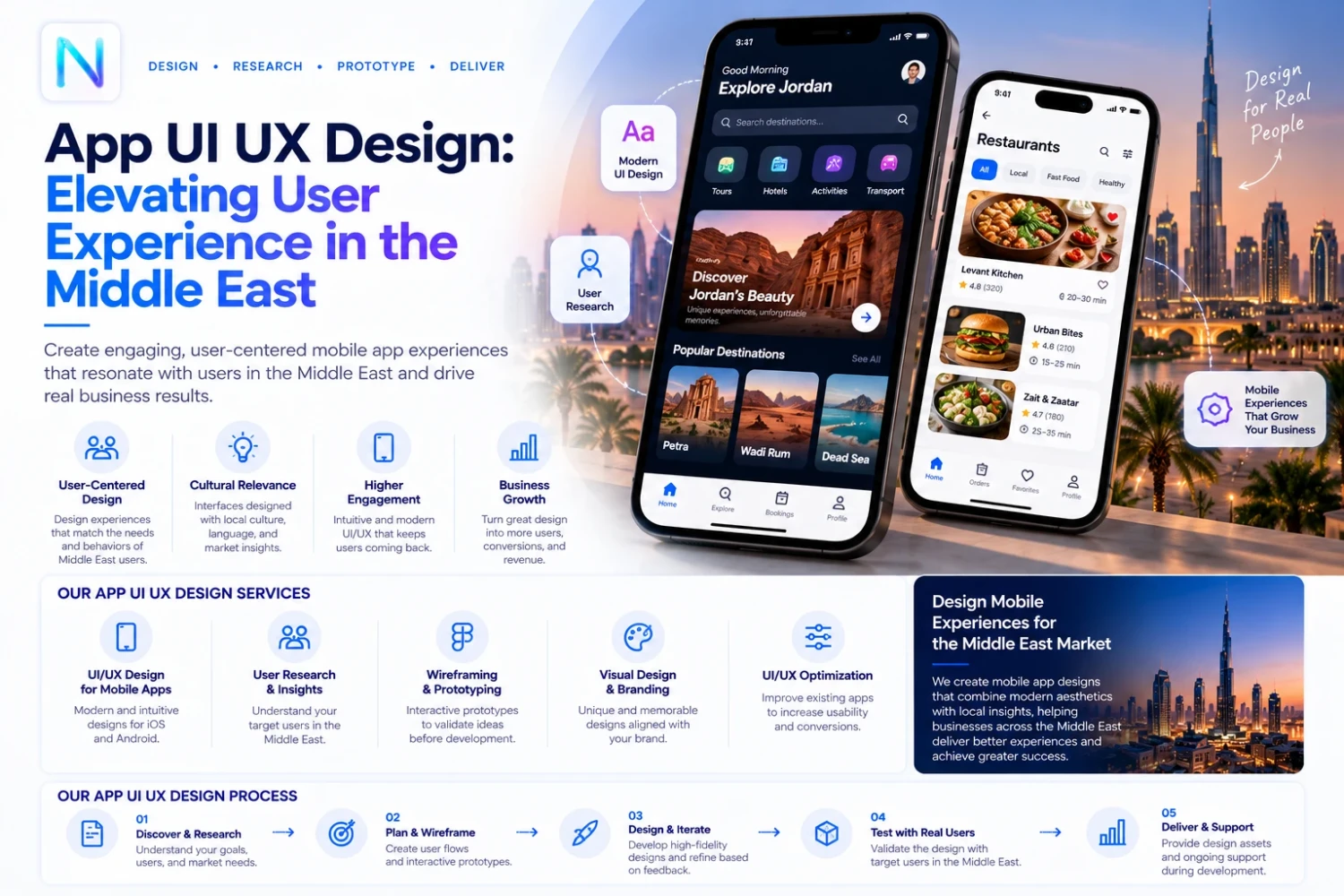
For an app serving users in Jordan, review the actual language experience. Arabic support should cover navigation, forms, validation messages, notifications and mixed Arabic/English content, not just translated labels. Test right-to-left layouts with realistic names, numbers and addresses.
Ask why the company recommends Flutter, native development or another approach for your product. Shared code can support Android and iOS development, but device capabilities, background behaviour and external integrations may still require platform-specific implementation and testing.
If the app needs to work with weak connectivity, define the tasks available offline and what happens when data is synchronised. These decisions should be part of the scope rather than assumptions made after development starts.
6. Agree ownership, access and release responsibilities
Before signing, document who owns the custom code and project assets, how third-party licences are handled, and what you receive at handover. Identify the accounts needed for hosting, stores, payments, notifications and other services, together with their owners and access arrangements.
Ask how the team handles authentication, user permissions, sensitive information, backups and production access. Any particular security or compliance requirement needs its own agreed scope and verification; a general statement that an app is “secure” is not enough.
For store submission, agree who prepares builds, screenshots, listing text and privacy information, and who handles review feedback. Submission work can be contracted; Apple and Google control their approval decisions and review timing.
7. Plan communication, acceptance and maintenance
Ask who will manage your project, how often you will see working demonstrations and how feedback is recorded. Agree how new requests affect the price and schedule.
Define acceptance using observable user journeys. For example, a registration journey should specify required information, validation, verification, failure messages and the expected result. This makes delivery easier to assess than a checklist that simply says “registration completed.”
After launch, distinguish correction of defects against the agreed scope from maintenance, operating-system updates and new features. Confirm support channels, coverage, response commitments where offered, recurring fees and handover arrangements if another team takes over.
Questions to ask before choosing a developer
- Which completed project is closest to our requirements, and what did your team deliver?
- What is included in the first release, and what is excluded?
- Are design, backend, administration, integrations and testing included?
- Who owns the source code and the external service accounts?
- Which assumptions or approvals could change the cost or schedule?
- How will we review progress and accept the completed work?
- What happens if we request changes or need another team to take over?
- What does support cover after launch, and what costs recur?
Frequently asked questions
How do I choose a mobile app development company in Jordan?
Start with a written project brief. Compare relevant delivery evidence, included work, communication, ownership and support. Ask shortlisted companies to respond to the same requirements so that differences in their proposals are clear.
How much does mobile app development cost in Jordan?
The cost depends on the product scope, platforms, design, backend, integrations and testing. Request an itemised quotation based on your requirements, with recurring provider charges and future changes explained separately.
Can one project include Android and iOS?
Yes. A project can cover both platforms using an appropriate development approach. The proposal should identify supported platforms and any device-specific work, testing or release responsibilities.
Should I choose Flutter or native development?
Choose after reviewing the product's requirements, device features, integrations and maintenance needs. Ask the development team to explain the trade-offs for your application rather than selecting a technology by popularity alone.
Will I receive the source code?
Source-code ownership and handover depend on the contract. Confirm the custom code, design files, documentation and account access you receive, along with any third-party licence restrictions, before work starts.
Is publishing an app the same as completing development?
No. Development, testing, submission preparation and store review are separate stages. Agree the developer's release responsibilities, while recognising that the stores control approval and review timing.
Discuss your app project with Neion Tech
Neion Tech is based in Jordan and works on mobile applications and connected software platforms for businesses in Jordan and the GCC. Explore our mobile app development services to review the service scope and relevant project references.
To begin a discussion, share your users, essential features, required platforms, languages, existing systems and preferred launch window. Contact Neion Tech about your app project so we can review the requirements and discuss an appropriate scope.
Leave a comments:

Comments: