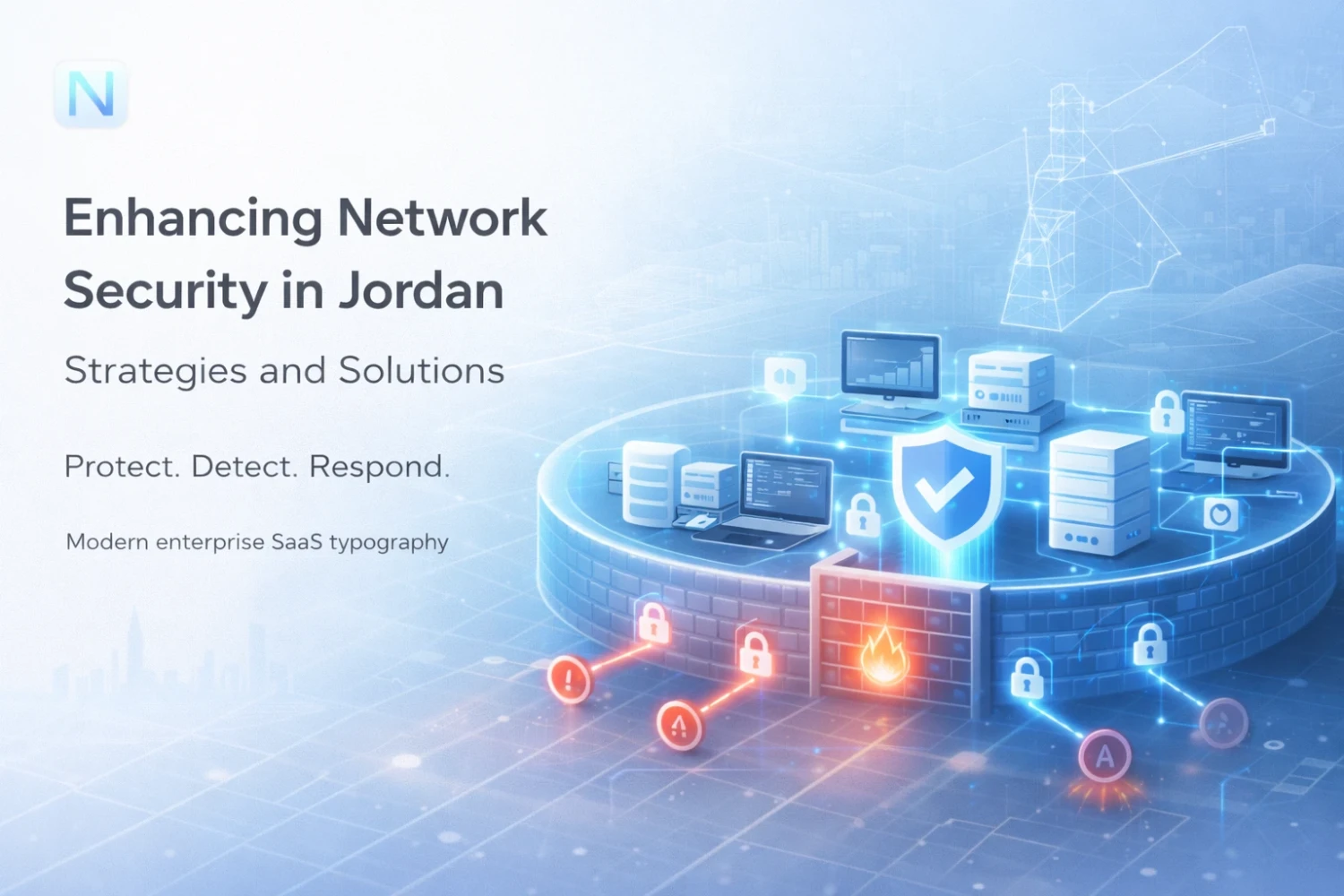
Understanding the Cybersecurity Landscape in Jordan
In recent years, Jordan and the wider Middle East have experienced a noticeable rise in cyber threats targeting businesses, government institutions, and critical infrastructure. Understanding the cybersecurity landscape in Jordan is essential for organizations seeking to protect their digital assets and maintain operational continuity.
With the increasing adoption of cloud services and remote work, investing in professional
network security and cloud security solutions in Jordan
has become a business necessity rather than a technical option.
The Growing Cybersecurity Threats in Jordan
Organizations across multiple industries face a variety of evolving cyber threats, including:
-
Phishing Attacks: One of the most common attack vectors used to steal credentials and sensitive data.
-
Ransomware Attacks: A rapidly growing threat capable of disrupting entire business operations.
-
Insider Threats: Risks caused by employees, whether intentional or accidental.
These threats highlight the importance of proactive cybersecurity strategies rather than reactive solutions.
Cybersecurity Regulations and Compliance in Jordan
Businesses operating in Jordan must comply with several cybersecurity and data protection regulations designed to safeguard digital environments, including:
-
Jordan Data Protection Law
-
Cybercrime Law
-
Industry-specific cybersecurity compliance standards
Ensuring compliance not only protects organizations from legal penalties but also strengthens customer trust and data integrity.
Key Components of Effective Network Security
Building a strong network security framework requires a multi-layered approach. Below are the core components every organization should implement.
1. Threat Detection and Monitoring
Early detection of threats is critical to minimizing damage. Effective practices include:
-
Deploying Intrusion Detection Systems (IDS) to monitor network traffic
-
Using SIEM (Security Information and Event Management) tools for real-time threat analysis
-
Continuously updating threat intelligence sources
These measures significantly improve an organization’s ability to respond to attacks in real time.
2. Vulnerability Assessment and Risk Management
Regular vulnerability assessments help identify weaknesses before attackers exploit them. A structured approach includes:
-
Identifying all network assets
-
Scanning systems using automated vulnerability tools
-
Prioritizing vulnerabilities based on risk level
-
Implementing a remediation and mitigation plan
3. Security Compliance and Governance
Maintaining cybersecurity compliance is an ongoing process that involves:
-
Regular policy reviews and updates
-
Employee cybersecurity awareness training
-
Independent third-party security audits
Strong governance frameworks reduce risks and support long-term security resilience.
Best Practices for Strengthening Network Security
Organizations can significantly enhance their cybersecurity posture by following these proven best practices:
1. Regular Software and System Updates
Ensure all operating systems, applications, and network devices are updated regularly to eliminate known vulnerabilities.
2. Multi-Factor Authentication (MFA)
Implement MFA across all critical systems to add an extra layer of protection against unauthorized access.
3. Employee Training and Awareness
Human error remains one of the biggest security risks. Continuous employee training helps reduce phishing success rates and improves overall security awareness.
Partnering with Neion Tech for Network Security in Jordan
At Neion Tech, we provide advanced and customized network security and cybersecurity solutions in Jordan designed to meet local regulatory requirements and international best practices. Our Jordan software development services ensure that security is built into applications, systems, and cloud infrastructures from the ground up.
Our services include:
-
Comprehensive vulnerability assessments
-
Advanced threat detection and incident response
-
Continuous cybersecurity compliance support
By partnering with Neion Tech, organizations gain a trusted cybersecurity partner capable of protecting their networks against modern threats.
Conclusion
In today’s rapidly evolving digital environment, network security is no longer optional—it is essential. By understanding cybersecurity threats, complying with regulations, and implementing proactive security measures, organizations can protect their data, systems, and reputation.
If you’re looking to strengthen your network security in Jordan, contact Neion Tech today and discover how our expert cybersecurity solutions can safeguard your business.
Frequently Asked Questions (FAQs)
What is network security?
Network security refers to the technologies, policies, and practices used to protect networks from unauthorized access, attacks, and data breaches.
How often should vulnerability assessments be conducted?
It is recommended to perform vulnerability assessments at least quarterly or after any major system change.
Why is multi-factor authentication important?
MFA adds an additional verification layer, significantly reducing the risk of unauthorized access.
How can organizations ensure compliance with cybersecurity regulations in Jordan?
Working with experienced cybersecurity providers who understand local regulations is the most effective way to ensure compliance.
Looking for professional services?
Continue with DevOps & Cloud Infrastructure Services after reading “Network Security in Jordan: Proven Strategies to Protect Your Business”—see how Neion Tech scopes, builds, and supports this capability for Jordan and GCC teams.
View DevOps & Cloud Infrastructure Services ServicesLeave a comments:


Comments: